4.5 tonnes
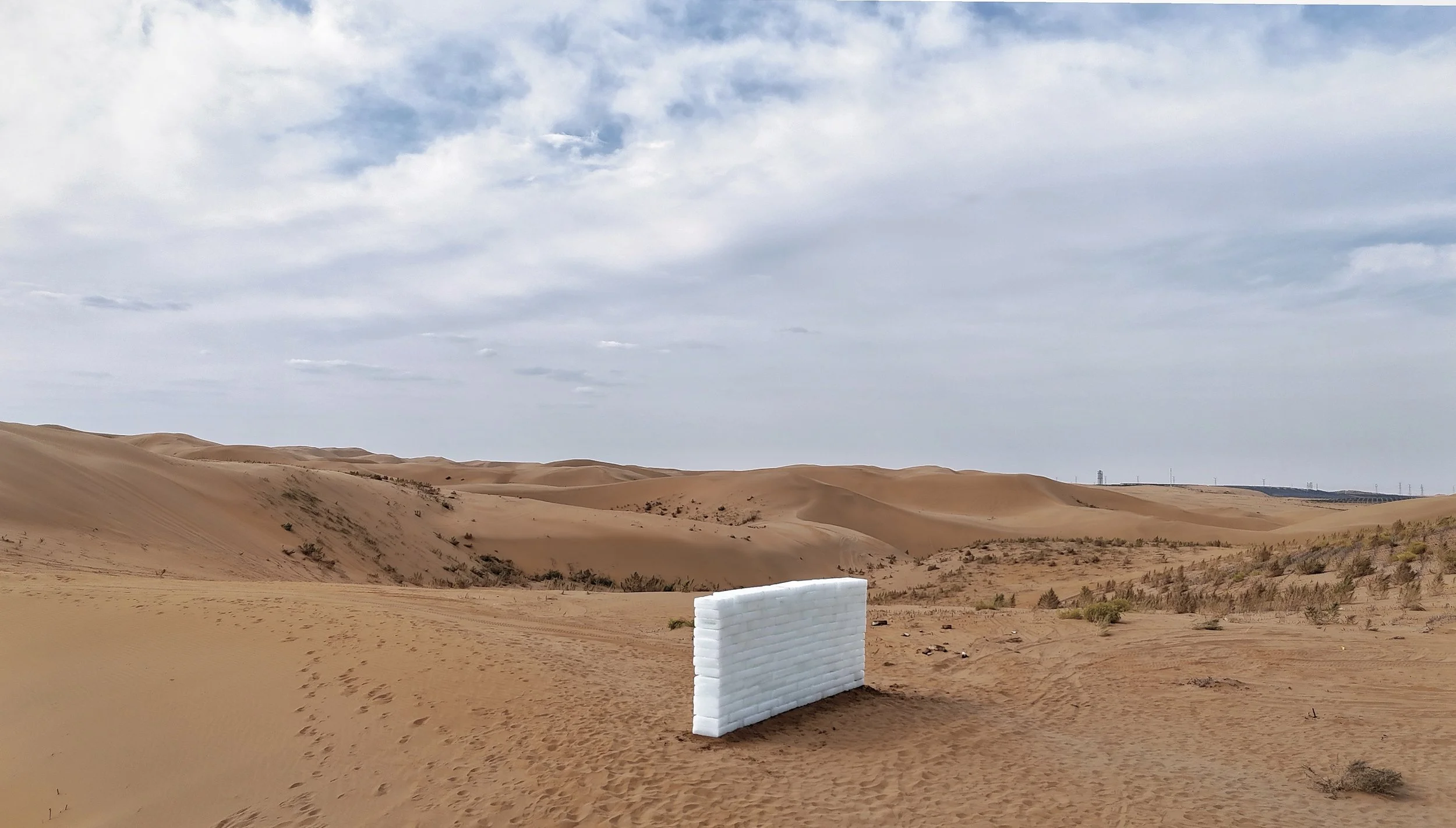
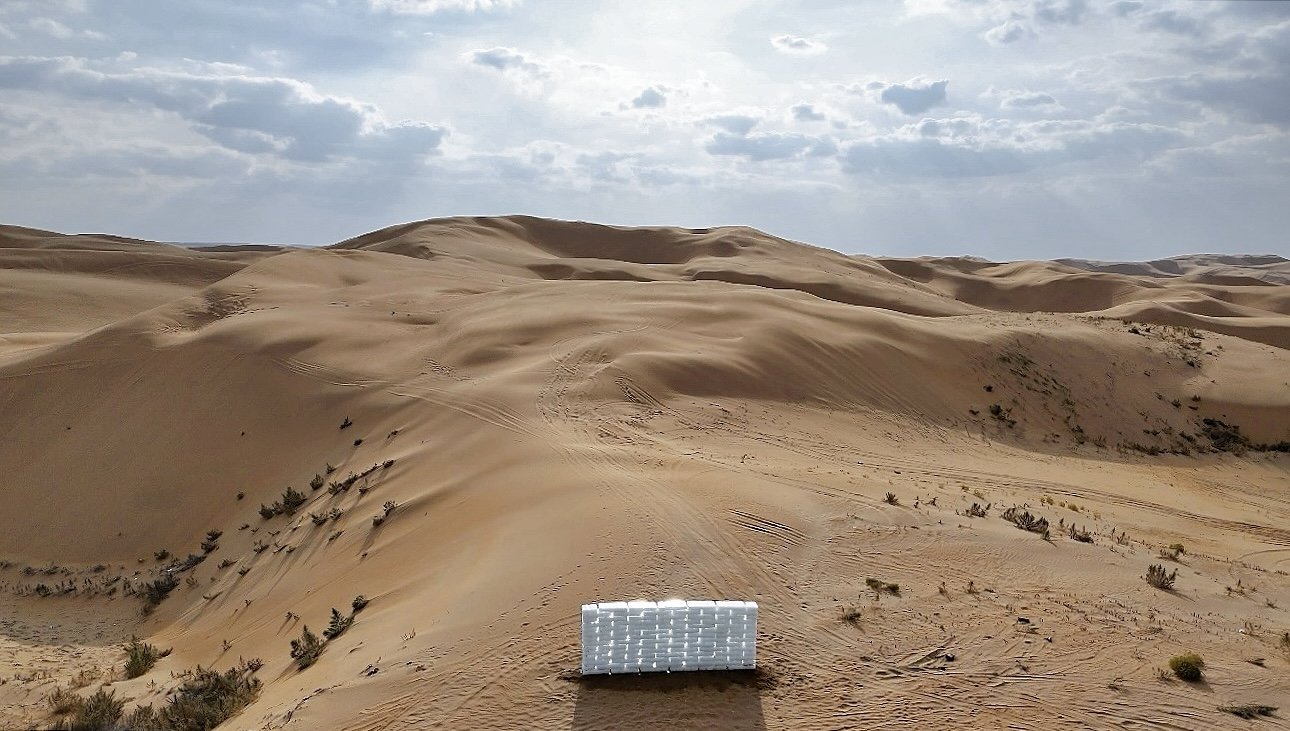
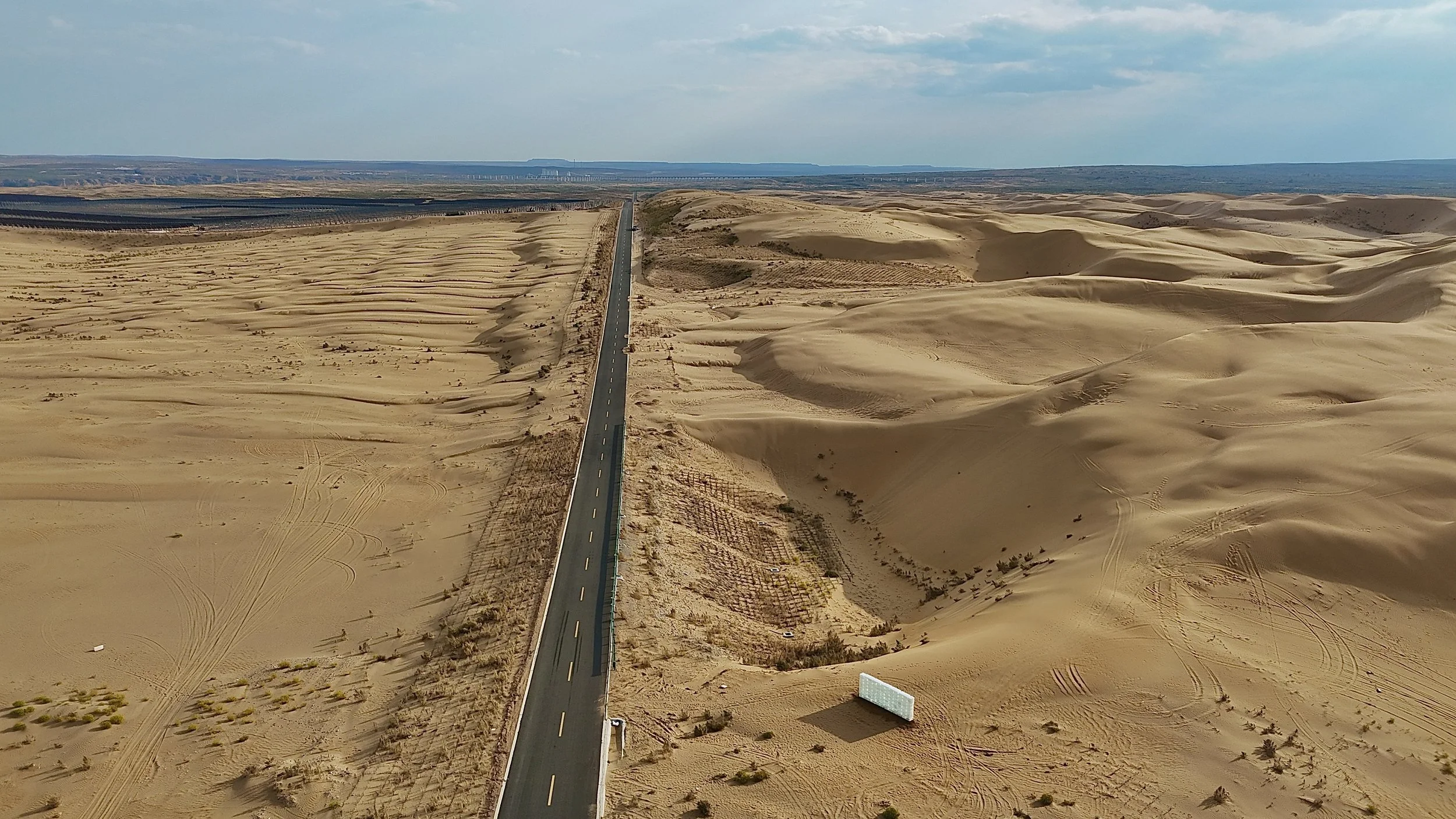
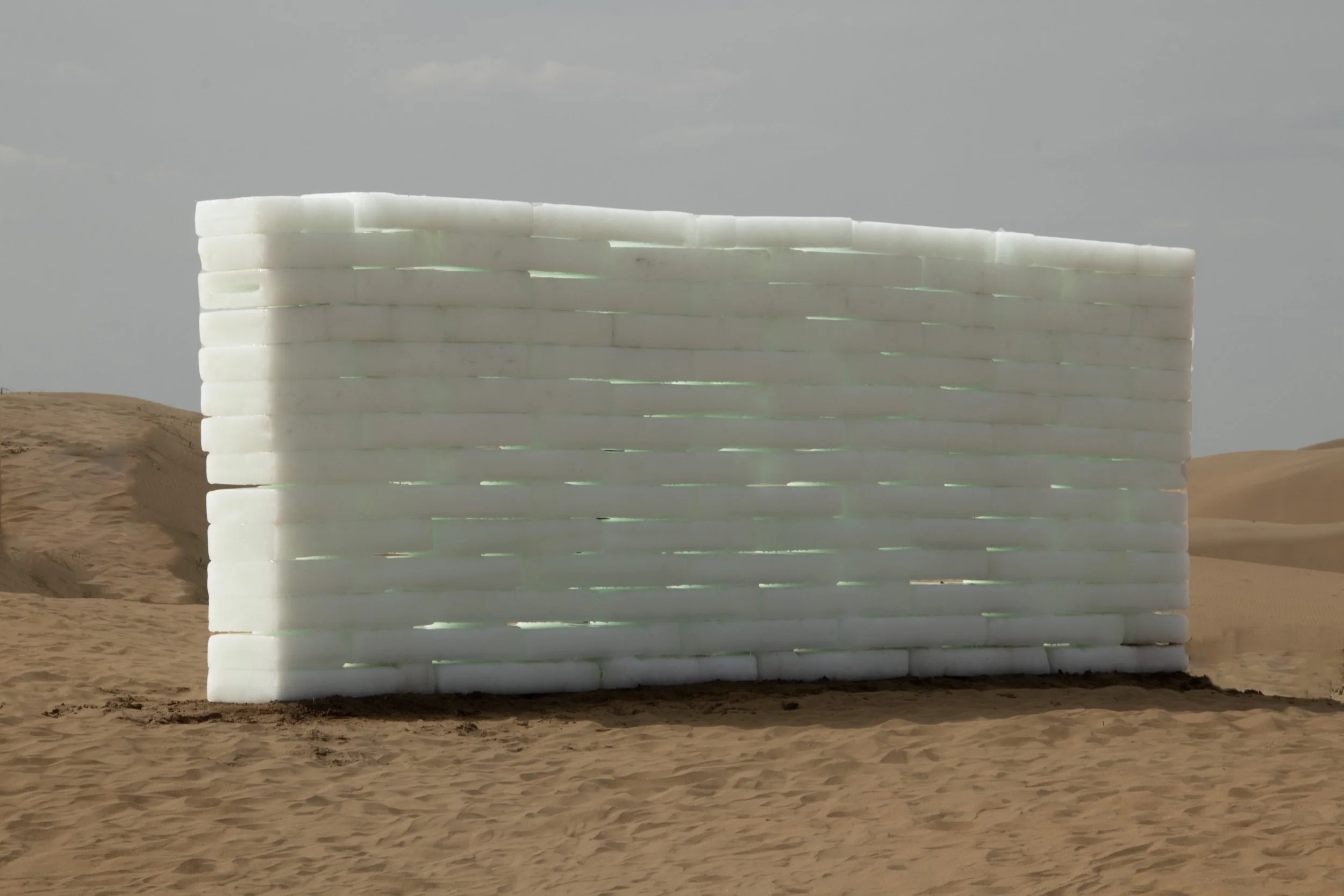
In the midst of the Kubuqi Desert, I collaborated with twelve locals to build an ice wall weighing roughly 4.5 tons. The ice blocks were carried from a nearby city, and herders selected the most stable position based on their extensive knowledge of dune load-bearing, winds, and terrain. As we pulled and stacked the ice, our breathing, footfall, and gestures settled into a steady beat that lasted eleven hours.
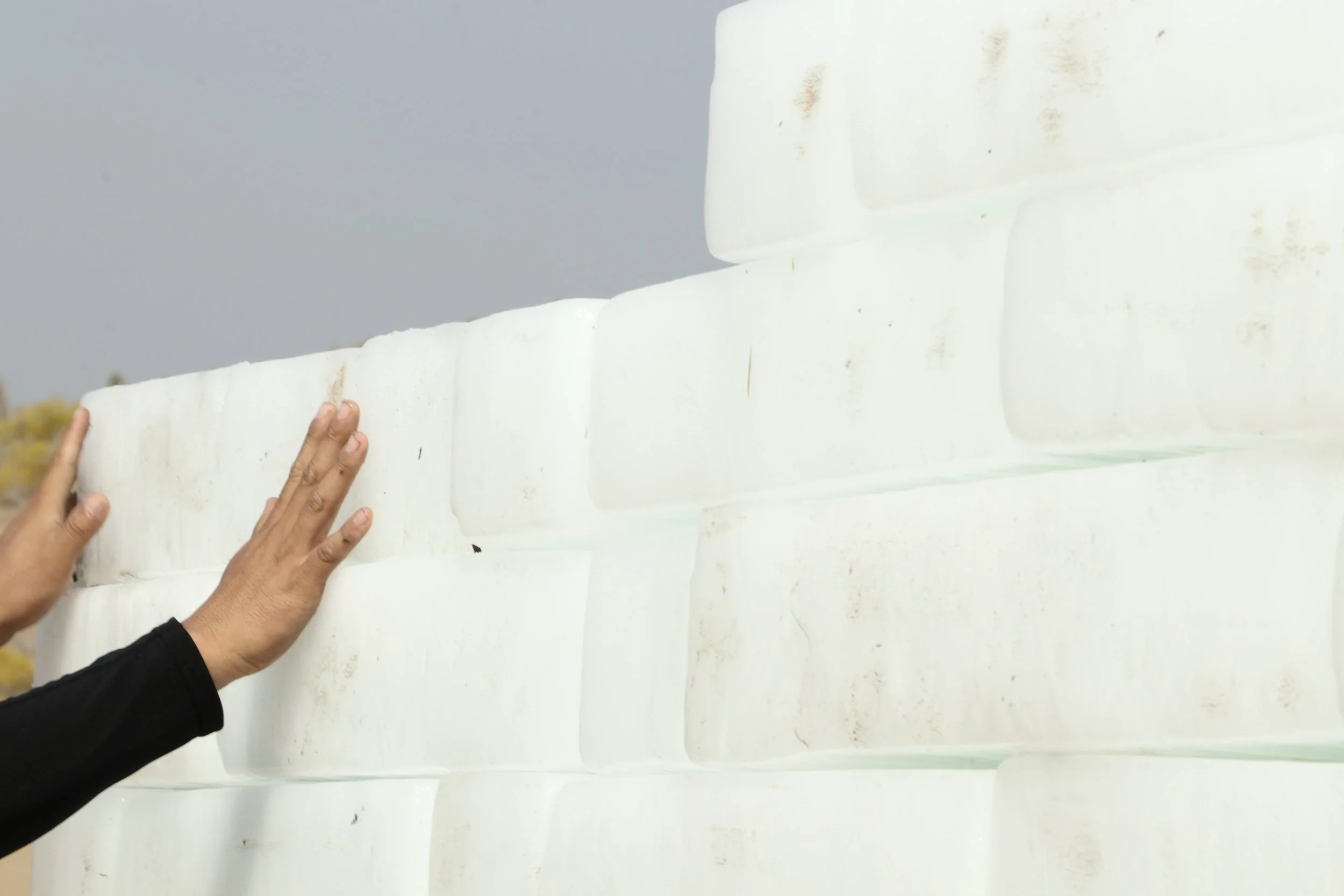
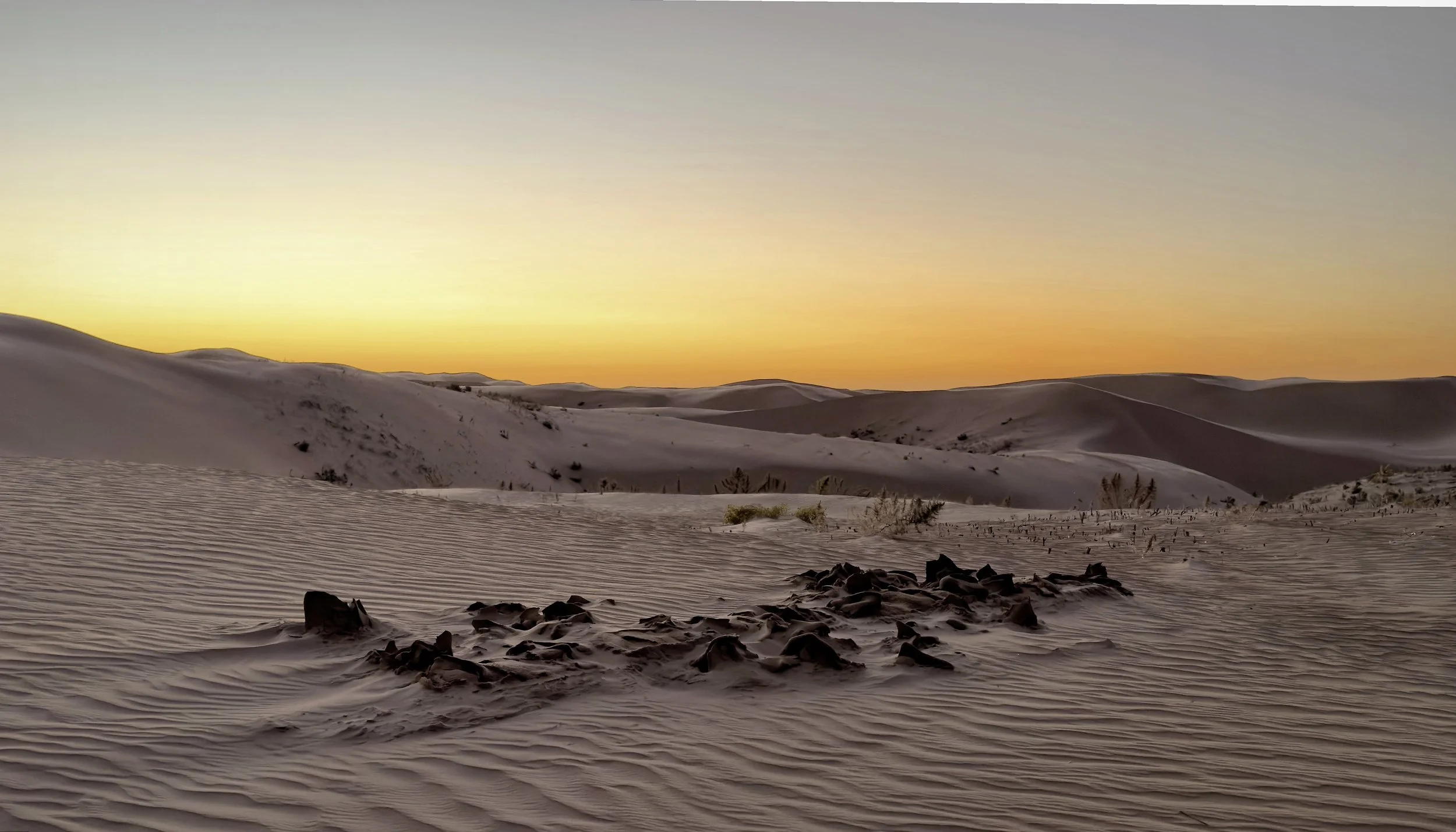
By the next day, the wall had melted in the sun, leaving just faint remains on the sand. Travelers and workers from the surrounding development zone paused, touched the leftover ice, listened to it fracture, and watched it melt. The area briefly became a public location, allowing visitors to witness the fragility, silence, and attentiveness caused by material dissolution.
This work's central theme was participatory art. The majority of participants were Mongolians, with a few Han farmers who had lived along the desert's edge for many years.
They faced grazing restrictions, ecological migration, grassland nationalization, and large-scale land development. Nomadic existence is becoming increasingly difficult to sustain between deserts. They described how the sand has become finer and hotter; how traditional herding trails have been cut off by fences and highways; and how the younger population, raised in cities, has lost sensitivity to wind patterns, wetness, and local landmarks. The ancient ecological knowledge that guided their predecessors' survival in the desert is fading, similar to the ice wall, as embodied practice is no longer sustainable.
Building an ice wall that will vanish also maintains a Mongolian cosmology in which wind, water, and land are believed to have spirit and whatever is taken from nature must eventually be returned. Ice Wall employs the ephemerality of ice to represent dwindling water sources, cultural diffusion, and the marginalization of local knowledge. Through participatory art, I hope to revive the long-silenced communication between Indigenous people and the desert, allowing ignored sensory experience and embodied memory to return to the ancestral land where they have lived for centuries.