

COLLECTIONA growing collection shaped through exhibitions, research, and ongoing conversations with artists.
The Arthoods Collection reflects our interest in contemporary practices that carry sensitivity, atmosphere, and lasting emotional presence.
Utagawa Hiroshige
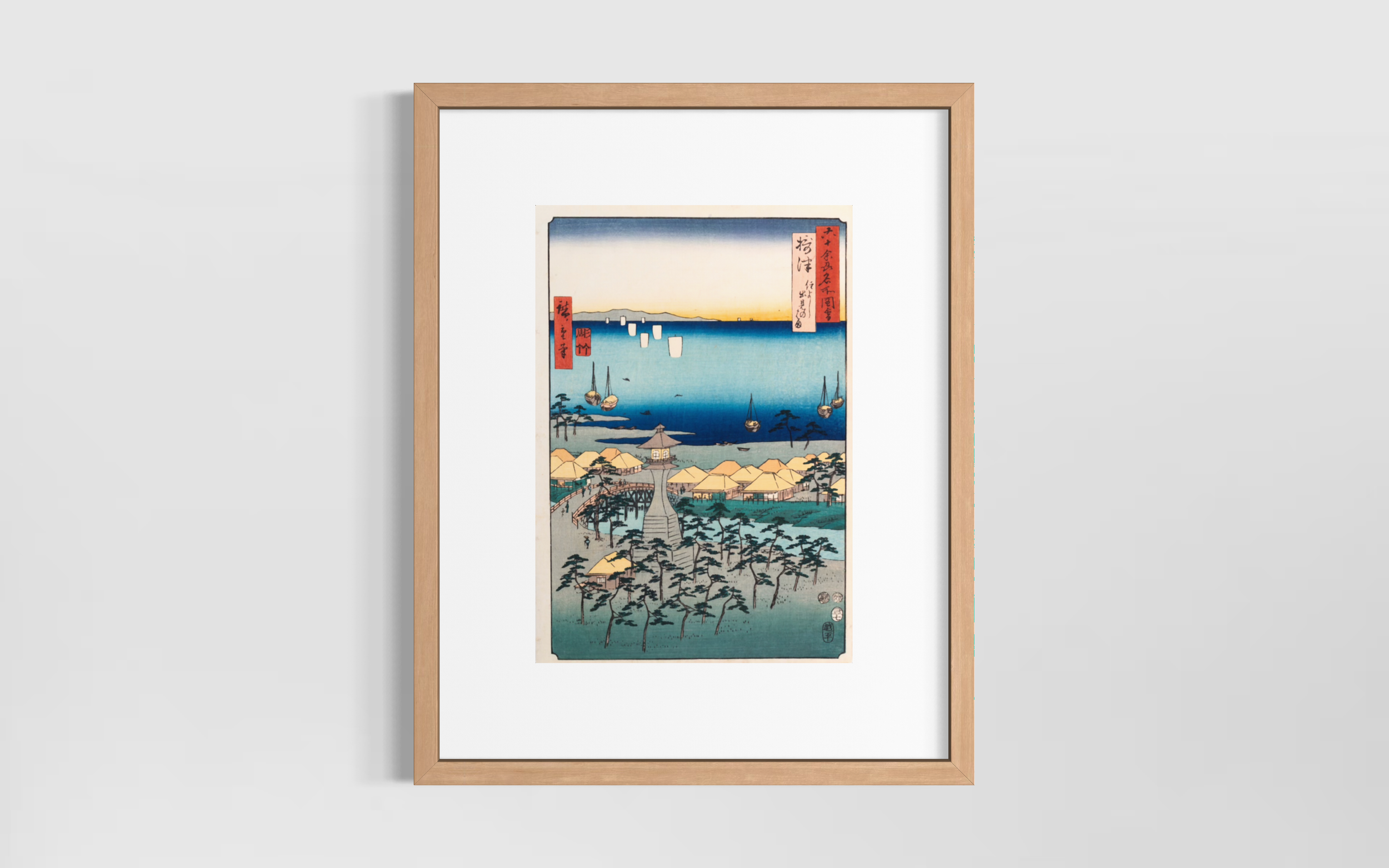
Settsu Province: Sumiyoshi, Idemi Beach
(Settsu, Sumiyoshi, Idemi no hama)
Edo period, 19th century
Colour woodblock print on paper
by Utagawa Hiroshige
From the Arthoods Collection — Not for Sale
Why We Collected This Work
This work marks an important expansion of the Arthoods Collection beyond contemporary practice and into the historical visual traditions that continue to influence artists today.
Utagawa Hiroshige is one of the defining figures of Japanese ukiyo-e printmaking. In Settsu Province: Sumiyoshi, Idemi Beach, what first drew us in was the extraordinary sense of atmosphere and distance. The broad expanse of water, the small sailing boats, the distant horizon, and the clustered architecture below create a composition that feels both highly structured and remarkably calm.
What interests Arthoods most, however, is not only the image itself, but the skill involved in producing it.
The extensive use of blue is particularly striking. In traditional woodblock printing, achieving a smooth and convincing gradation of colour requires an exceptional level of control. The printer must carefully manage pigment, moisture, pressure, and registration across the surface of the paper. The transition from lighter to deeper tones in the water is therefore not simply a visual effect, but evidence of the technical precision and craftsmanship behind the print.
This process is especially important to us because Arthoods is interested in the relationship between image and making. We are drawn to works where material, process, and technique are inseparable from the final visual experience. More than a century later, the blue in this print still holds a strong visual presence, allowing us to appreciate not only Hiroshige’s composition, but also the remarkable skill required to realise it.
Despite being produced in the nineteenth century, the work also feels strikingly modern. Its elevated viewpoint, flattened spatial structure, bold areas of colour, and carefully balanced composition continue to resonate with the visual language of contemporary art.
Hiroshige’s prints would later have a profound influence beyond Japan, particularly as Japanese prints circulated in Europe during the nineteenth century. For Arthoods, this work therefore creates a connection between historical printmaking and many of the visual ideas that remain present in contemporary image-making today.
Acquired through Sotheby’s, this print represents an important moment in the development of the Arthoods Collection. Our collection is not defined by one period or movement, but by an interest in works that reveal something meaningful about image, material, process, atmosphere, and ways of seeing.
Bringing Hiroshige into the Arthoods Collection reflects that approach: placing works from different periods in conversation, while recognising the skill, sensitivity, and making that allow an image to endure through time.
Provenance
Sotheby’s, Asian Art / 5000 Years, Lot 449
Daisy Fulton
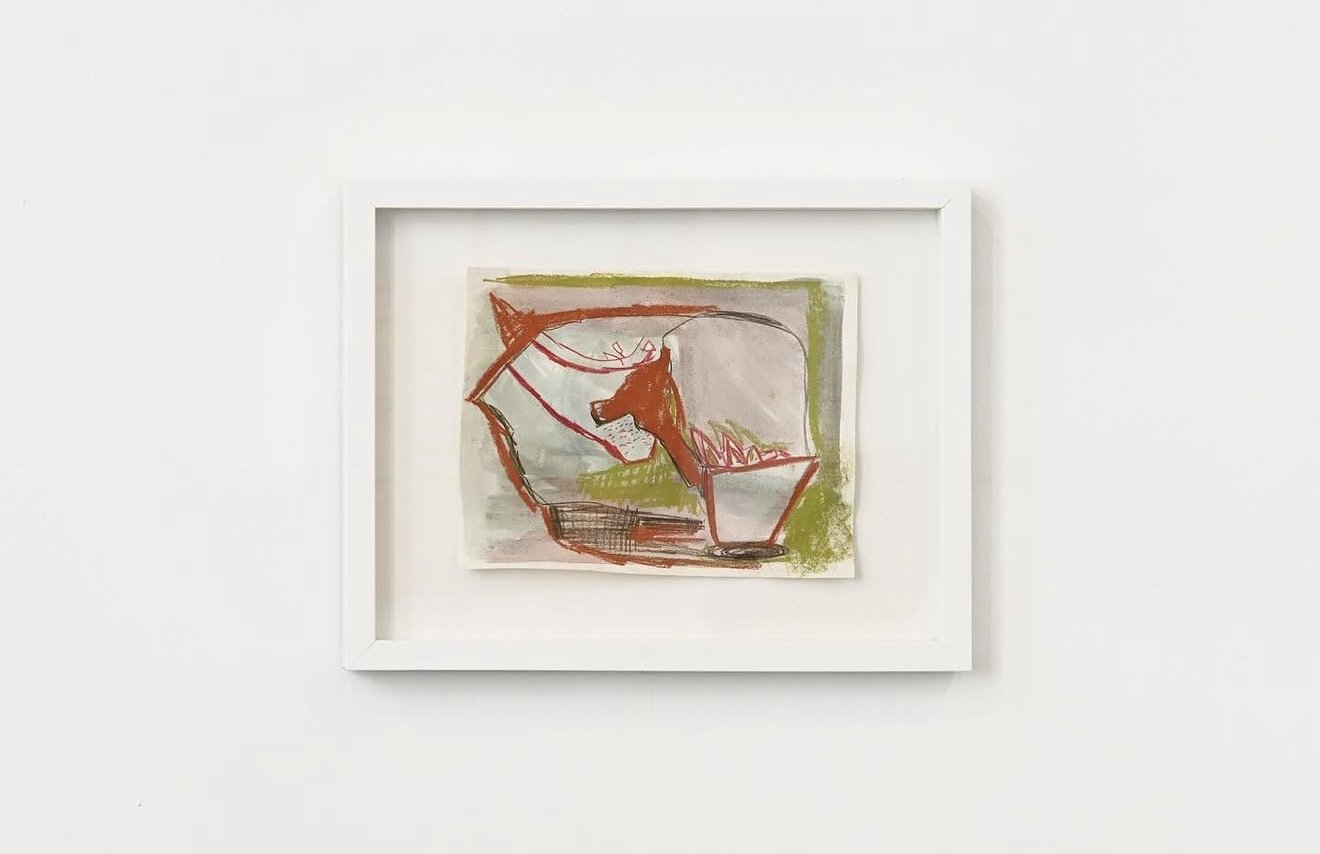
Blue hour, watercolour, Chalk and Pencil on paper, Framed
by Daisy Fulton
From the Arthoods Collection — Not for Sale
Why We Collected This Work
Blue Hour is one of the works we have chosen to collect within the Arthoods Collection, representing the kind of artistic practice we hope to champion through our platform.
During our visit to Daisy Fulton’s studio, we had the opportunity to learn more about her creative process and the thinking behind her work. What struck us most was not only the paintings themselves, but the clarity and conviction with which she spoke about her practice. Daisy has a remarkable ability to articulate the structure, composition and conceptual framework of her paintings while remaining open to intuition, experimentation and discovery throughout the creative process.
This balance between thoughtful construction and spontaneity is evident in Blue Hour. Though modest in scale, the work possesses a quiet complexity. Forms emerge and dissolve, shifting between observation, memory and imagination. Rather than presenting a fixed narrative, the painting invites viewers into a space of reflection, where meaning unfolds gradually through looking.
At Arthoods, we believe it is important to create opportunities for audiences to engage with artists whose practices are still evolving and developing. We are particularly interested in artists who demonstrate a strong commitment to their craft while continuing to push their visual language forward. Daisy Fulton is one such artist.
By collecting and presenting works such as Blue Hour, we hope to introduce more people to emerging artists whose practices deserve wider recognition. Daisy’s thoughtful approach to painting, combined with her ability to transform everyday observations into compelling visual experiences, makes her an artist we are excited to follow and support in the years ahead.
Antony Gormley
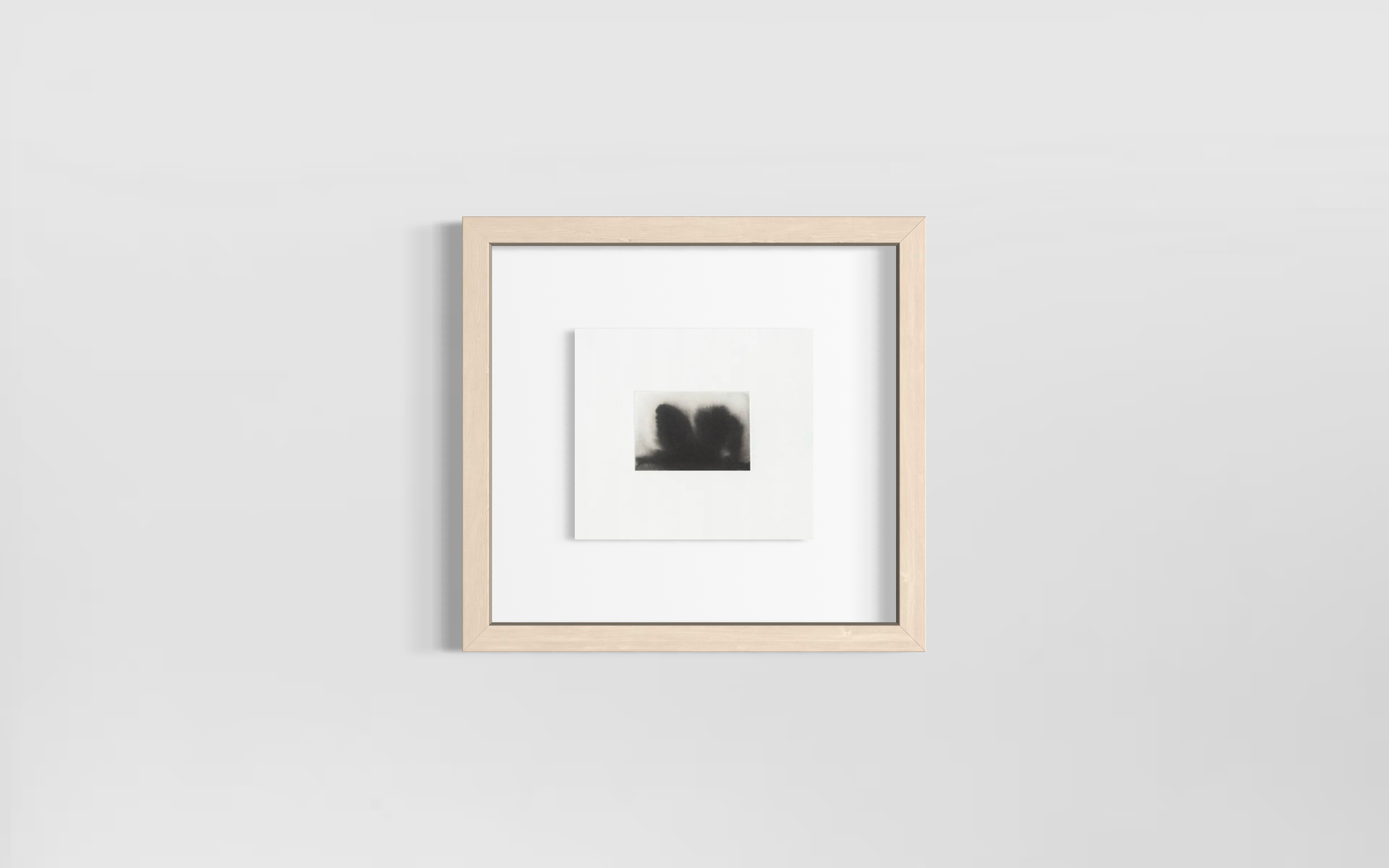
Shelter, photo-polymer gravure on Velin arches Blanc 270 gsm paper
by Antony Gormley
From the Arthoods Collection — Not for Sale
Why We Collected This Work
Shelter entered the Arthoods Collection not only because of Antony Gormley’s significance within contemporary British art, but also because it reveals a quieter and lesser-known aspect of his practice.
Unlike a conventional drawing, Shelter emerged through a process that embraced the interaction between water, pigment, paper, and time. Gormley saturated the paper with water before introducing pigment through a fully loaded Chinese brush, allowing the materials to respond to one another in ways that could not be entirely controlled. Rather than imposing a predetermined image, he worked alongside the natural behaviour of the medium, allowing form to emerge gradually through chance and observation.
This approach is particularly compelling as it transforms drawing into a process of discovery. The resulting image appears suspended between landscape and body, presence and absence. At first glance, the work seems simple, yet the longer one spends with it, the more it reveals. It invites contemplation rather than explanation.
As one of the most influential figures in contemporary British art, Antony Gormley is widely recognised for his exploration of the relationship between the body, space, and human existence. While monumental works such as Angel of the North and Another Place have become part of the British cultural landscape, Shelter offers a more intimate and introspective encounter with the artist’s ideas.
This particular impression, numbered 11/100, was commissioned by Liverpool Biennial to celebrate its 25th anniversary. The work was acquired during Manchester Contemporary Art Fair 2025, making it a meaningful addition to the Arthoods Collection. As a collection committed to engaging with contemporary artistic practice, acquiring this piece in Manchester—a city with a vibrant and evolving cultural scene—felt especially significant.
We collected Shelter not simply because of its limited edition status, but because it demonstrates how a restrained image can hold remarkable conceptual and emotional depth. Through the meeting of material, process, and imagination, the work reflects the values that continue to shape the Arthoods Collection: curiosity, reflection, and a belief in the enduring power of contemporary art.
Edward Hongyi Jia
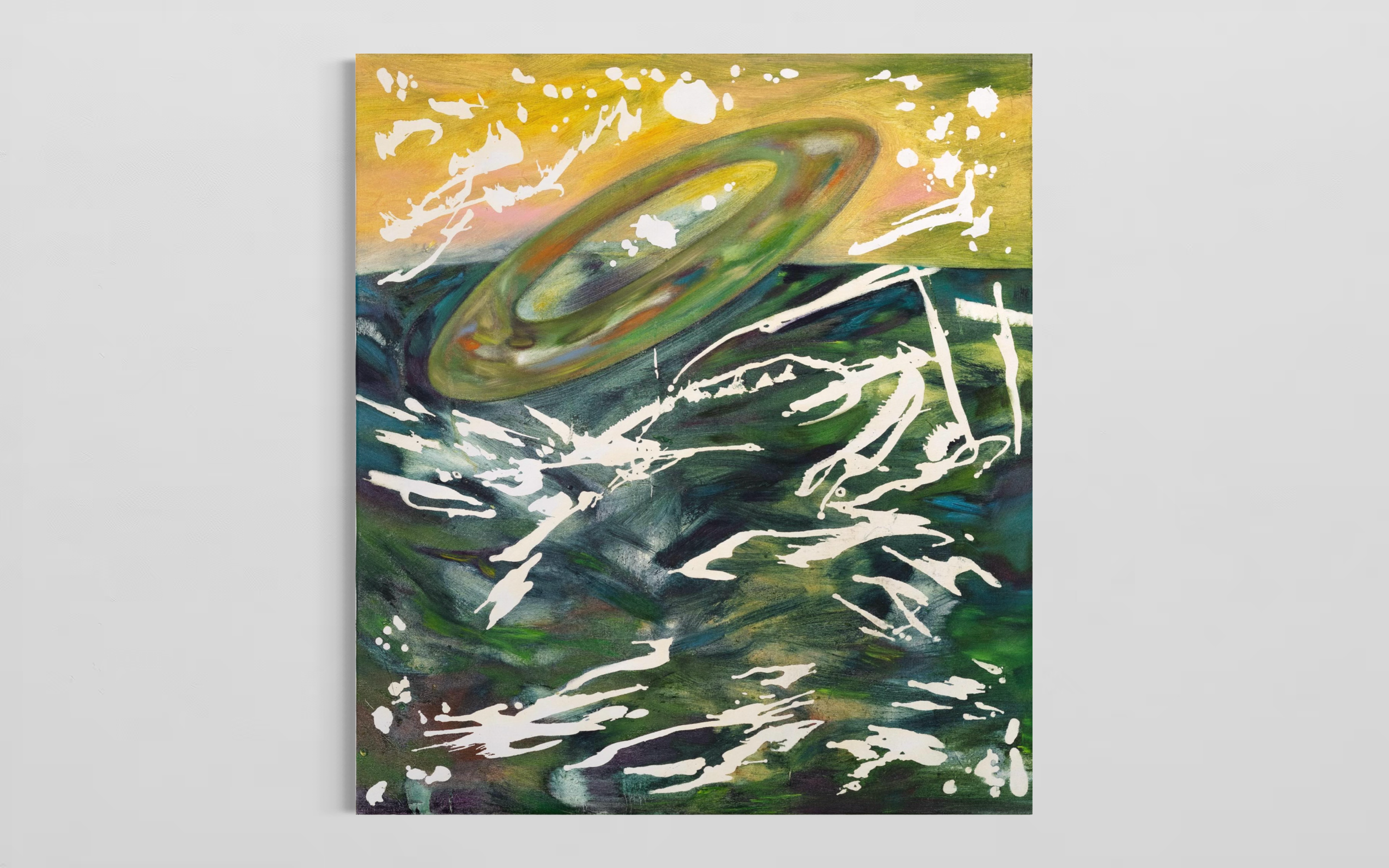
Spray, oil paint on canvas
by Edward.Hongyi.JIA
From the Arthoods Collection — Not for Sale
Why Arthoods collected this work
We have known Edward Hongyi Jia's practice for many years, dating back to our shared connection through Chelsea College of Arts. Over time, we have had the opportunity to witness the evolution of his work and the development of a painting language that is distinctly his own.
Spray was the second artwork acquired for the Arthoods Collection.
What drew us to this work was not only its visual energy, but also its sense of openness. The painting exists somewhere between landscape, memory, and imagination. The floating form and gestural marks suggest a moment of transformation, allowing the viewer to move freely between different interpretations and emotional responses.
Over the years, we have admired Edward's dedication to painting and his willingness to continuously challenge and expand his practice. Collecting Spray was not simply a decision based on a single artwork; it was also an acknowledgement of a body of work that we have followed, believed in, and grown alongside.
For Arthoods, collecting is never just about ownership. It is about preserving meaningful connections, shared experiences, and artistic journeys. As fellow artists who began part of our creative paths at Chelsea College of Arts, this work represents not only Edward's development as an artist, but also a chapter of our own artistic journey.
As the Arthoods Collection continues to grow, we hope to support and preserve works by artists whose practices are driven by curiosity, commitment, and a genuine desire to explore new possibilities through art.
Wan Kounen
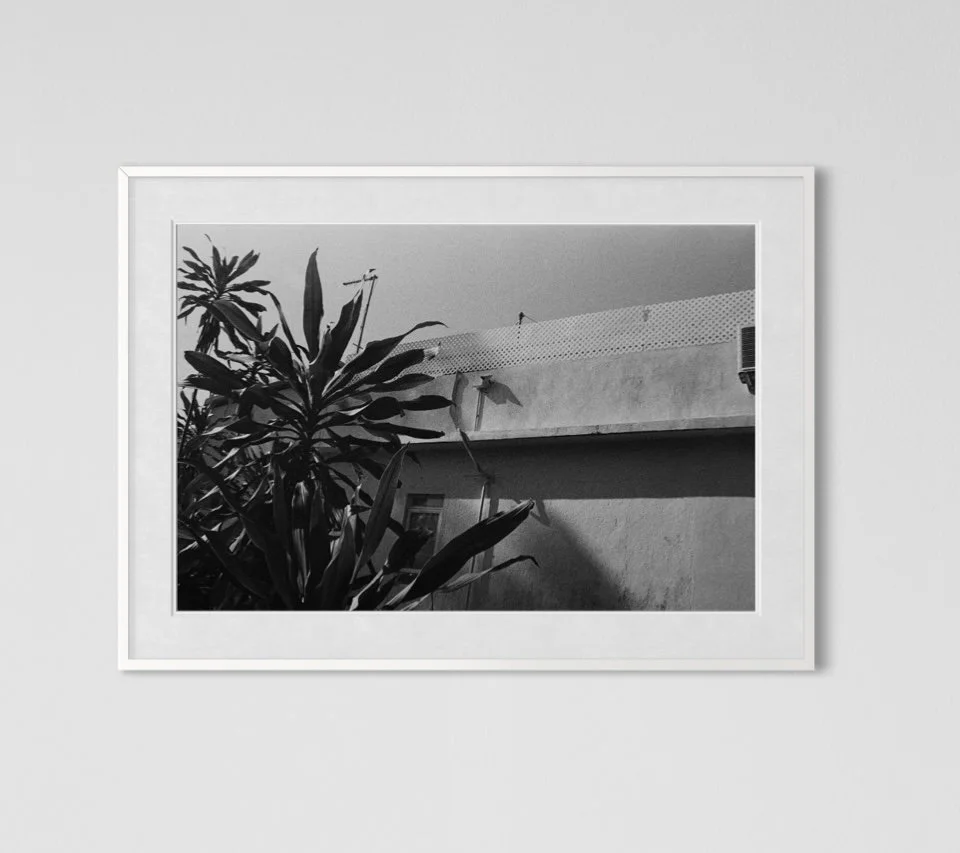
Mercury
by Wan Kounen
From the Arthoods Collection — Not for Sale
Why Arthoods collected this work
We first came across Wan Kounen’s practice during the pandemic period.What stayed with us was not only the atmosphere within the works, but also the artist’s dedication and consistency during such an uncertain time. Even throughout the pandemic, Wan Kounen continued to quietly document the city through photography, observing fragments of everyday urban life with great sensitivity and professionalism.
Mercury particularly resonated with us through its stillness and subtle tension between nature and architecture. The work reflects a quiet presence that feels both personal and universal, something we felt strongly aligned with the direction and values of Arthoods.
As a platform, we hope to collect and support works that not only hold visual strength, but also carry traces of time, observation, and lived experience.