

Where Paintings Begin: Inside Daisy Fulton's Studio
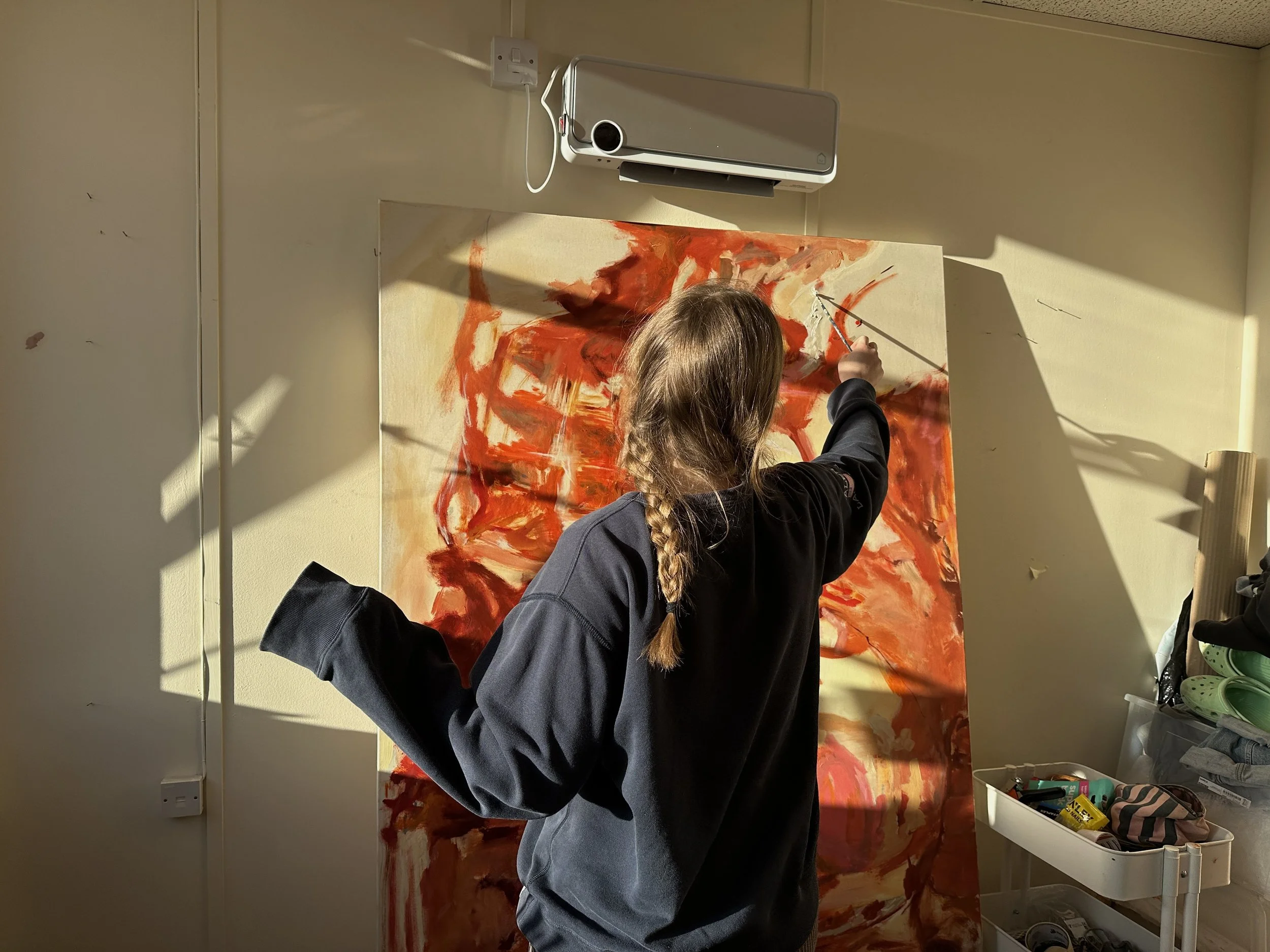
Daisy Fulton in her studio
Before a painting reaches the gallery wall, it often begins elsewhere. A sketch in a notebook, a photograph taken in passing, a combination of colours noticed during a walk, or an idea that quietly develops over time. These fragments gradually accumulate, finding their place within the studio before becoming part of a finished work.
For this feature, Daisy Fulton generously shared photographs from her studio, sketchbooks, working process, and sources of inspiration, inviting us into the environment where her paintings take shape. Through these images, we are offered a glimpse into the quieter moments of artistic practice, revealing the observations, materials, and everyday experiences that contribute to her work.
Rather than focusing solely on completed paintings, these photographs allow us to look beyond the canvas and into the spaces where ideas are tested, developed, and transformed. Together, they provide a deeper understanding of Fulton's creative process and the role that curiosity, experimentation, and reflection play within her practice.
In this feature, we step inside Daisy Fulton's studio and explore the materials, inspirations, and moments that shape her work, offering a closer look at where paintings begin.
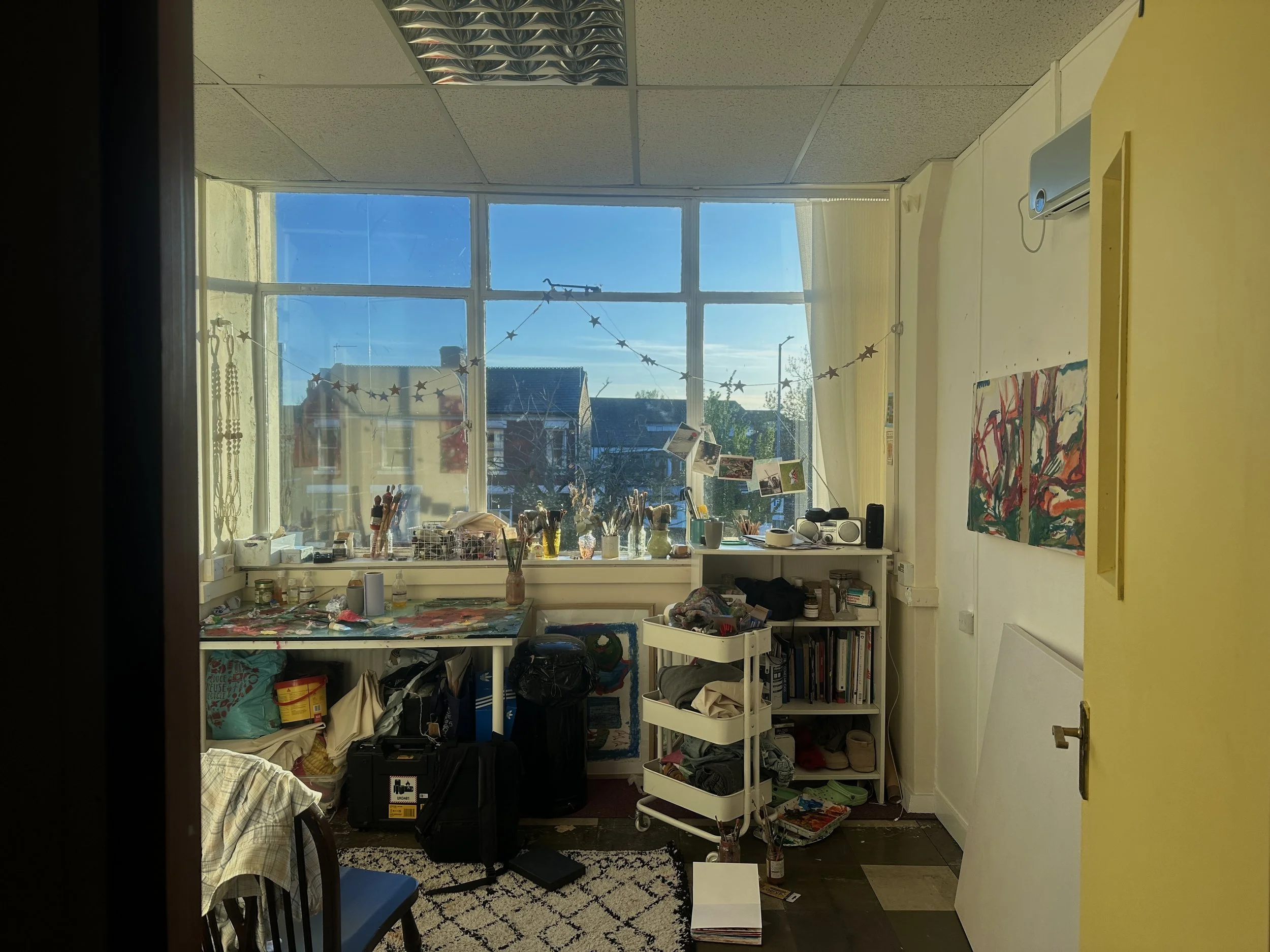
Afternoon light across the studio as a painting continues to unfold.
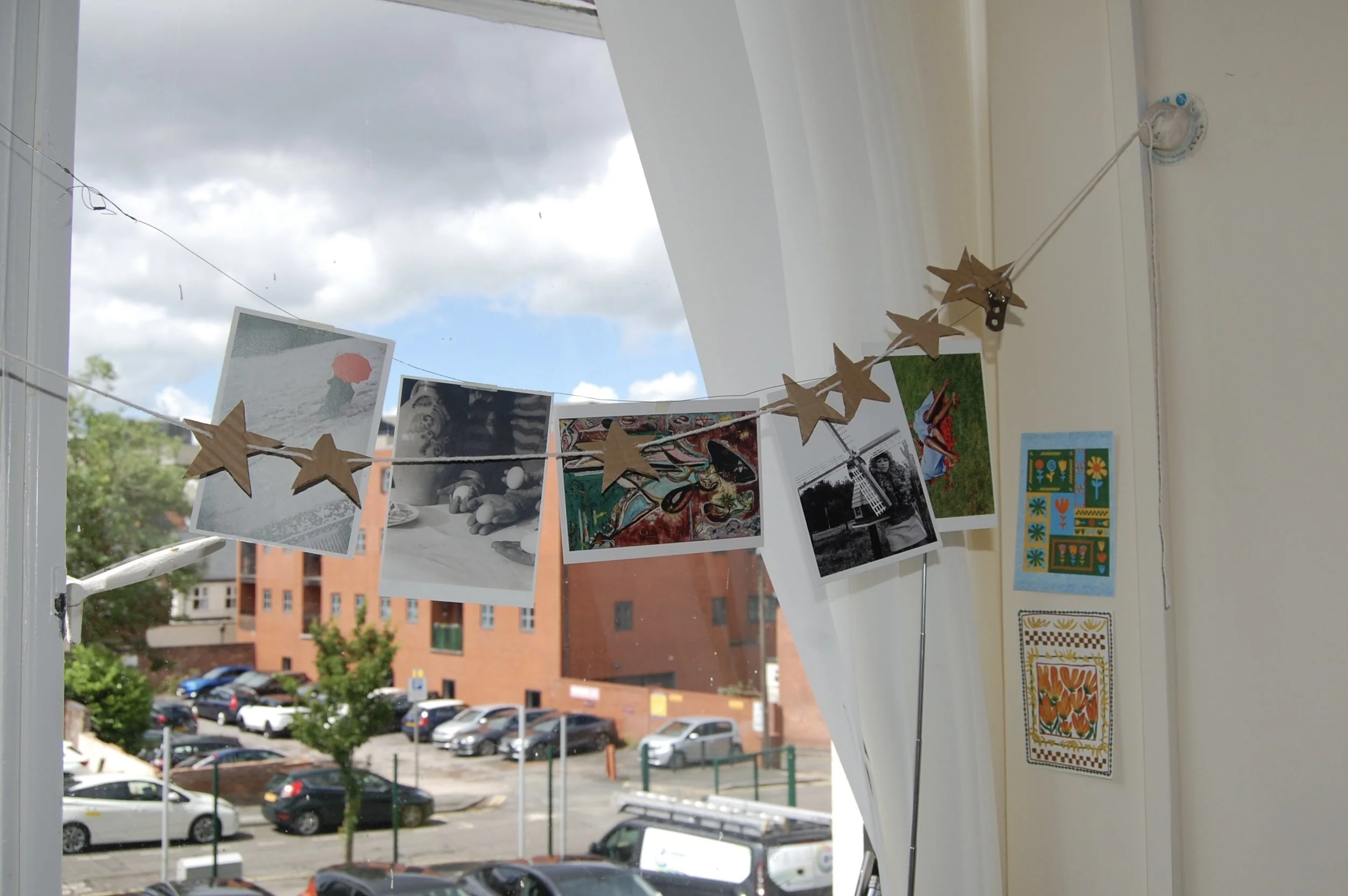
Postcards in studio
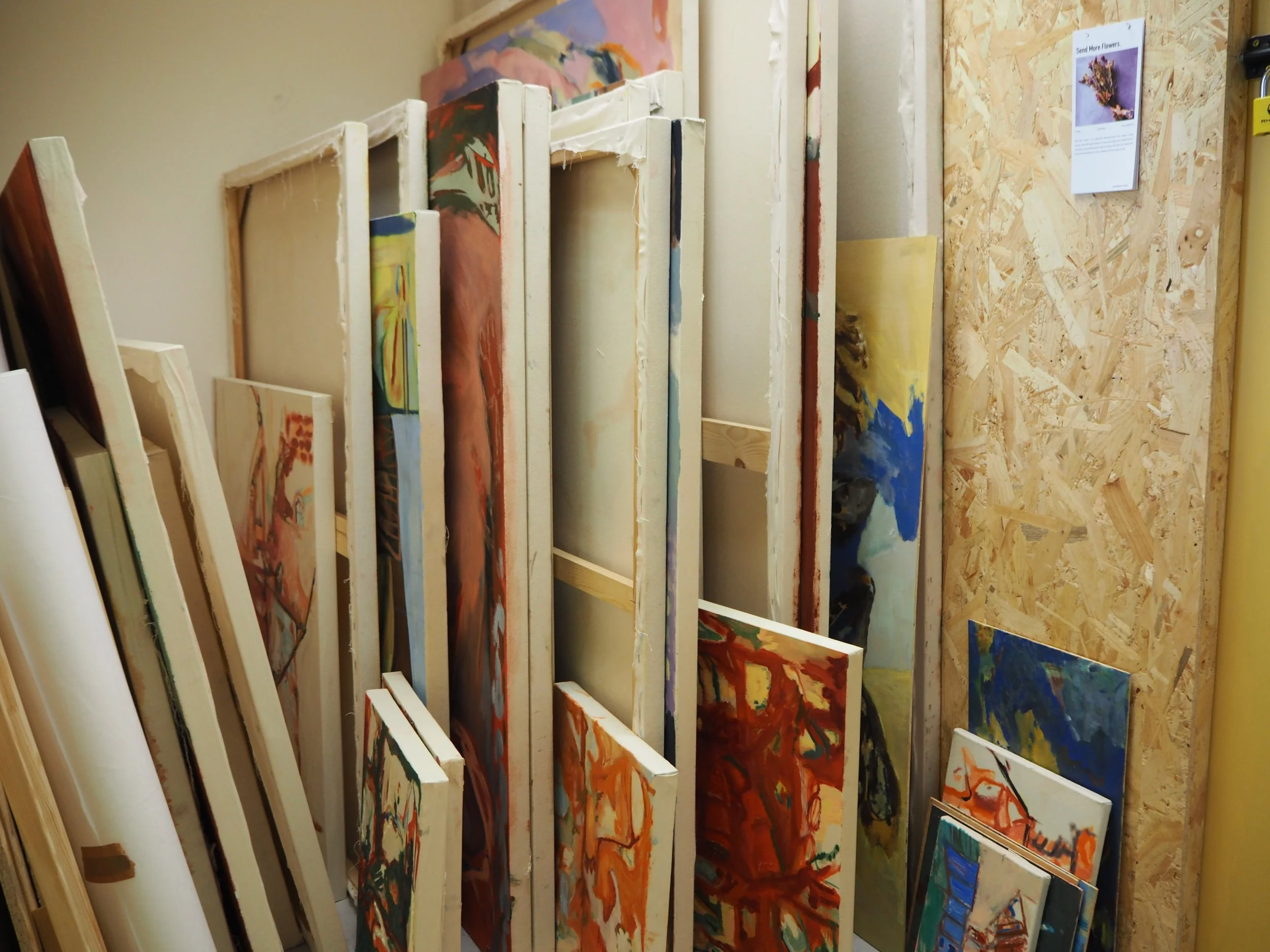
Paintings at different stages of completion stored within the studio
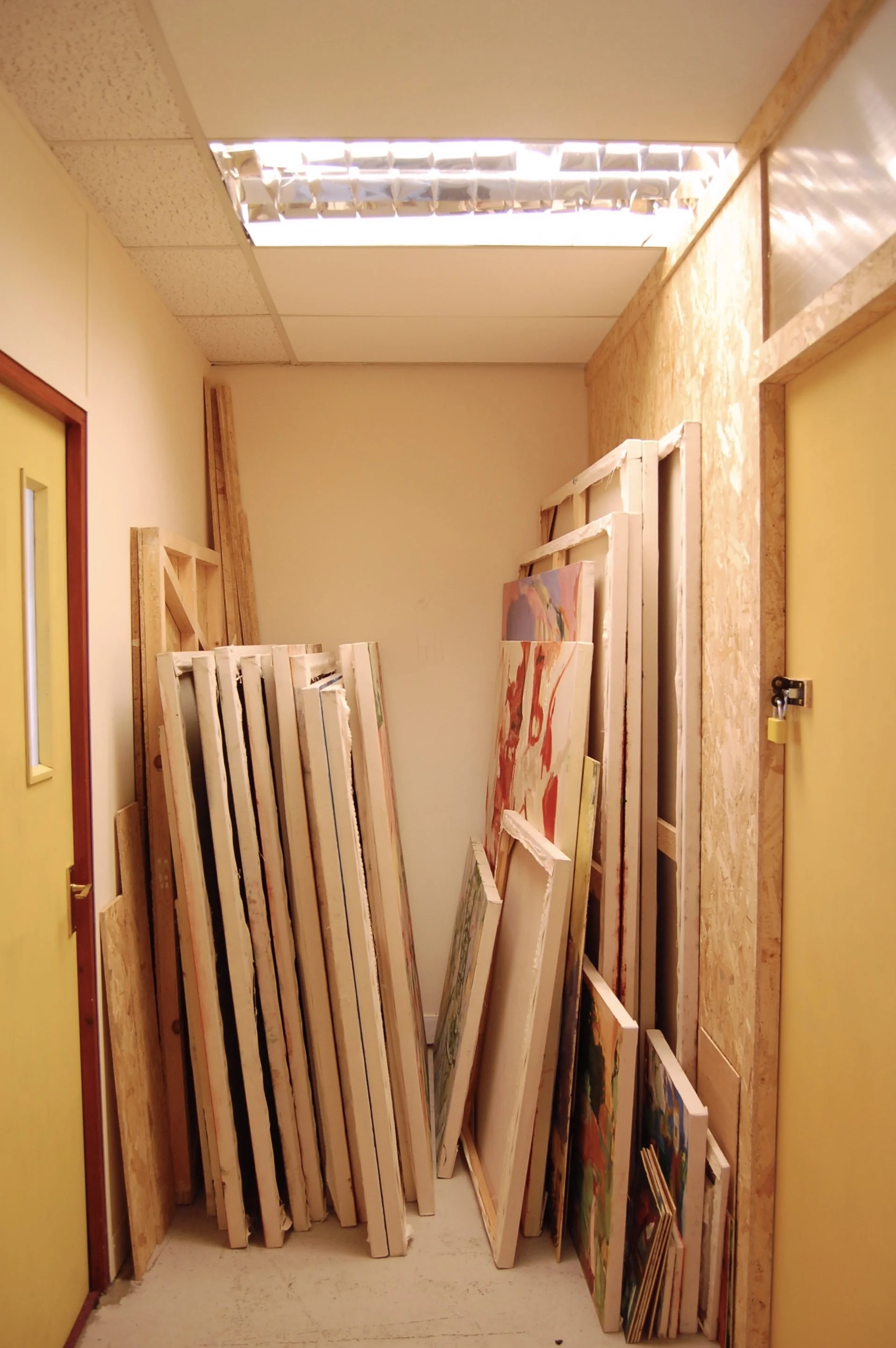
Discuss the stacked paintings, unfinished works, and how paintings continue to develop over time rather than reaching a fixed conclusion. The storage area becomes a visual archive of previous ideas, experiments, and ongoing conversations between works.
Situated within PINK, a vibrant artist studio community in Stockport, Greater Manchester, Daisy Fulton's studio offers a glimpse into the environment where her paintings quietly take shape. Beyond its walls, PINK is home to a diverse community of artists working across disciplines, creating a setting where individual practices develop alongside a shared culture of making, conversation, and creative exchange.
Stepping into the studio, one is met with stacks of canvases leaning against walls, works in progress waiting to be revisited, and a collection of postcards, photographs, and visual fragments gathered over time. Rather than existing as a neatly organised workspace, the studio feels alive with activity and possibility. Paintings move between stages of completion, references accumulate in unexpected corners, and ideas remain in constant dialogue with the materials around them.
Natural light fills the space throughout the day, shifting across surfaces and illuminating details that might otherwise go unnoticed. It is within this environment that observations are collected, colours are tested, and compositions slowly emerge. The studio becomes more than a place of production; it is a space where experiences, memories, and visual encounters are allowed to settle before finding their way into a painting.
Looking through these photographs, it becomes clear that the studio is not simply where Daisy Fulton makes her work. It is where her paintings begin.
Sources of Inspiration
Before preparing this feature, we invited Daisy Fulton to share a selection of photographs from her phone; images she had collected over time rather than specifically documenting her artistic practice. Looking through them, certain themes begin to emerge. Flowers, architectural details, weathered surfaces, changing light, and moments encountered while travelling all appear repeatedly.
As Daisy noted, "I wouldn't say my work is floral at all, but I sure do take an awful lot of pictures of flowers." While these photographs may not directly appear within her paintings, they offer valuable insight into the way she observes the world around her. They reveal an attentiveness to colour, texture, atmosphere, and the small visual moments that often go unnoticed.
Among the images are photographs taken in Madrid and Marrakesh, alongside everyday observations gathered closer to home. Together, they form an informal archive of experiences and impressions, one that quietly feeds into her studio practice. Rather than functioning as direct references, these images become fragments that are absorbed, remembered, and eventually transformed through painting.
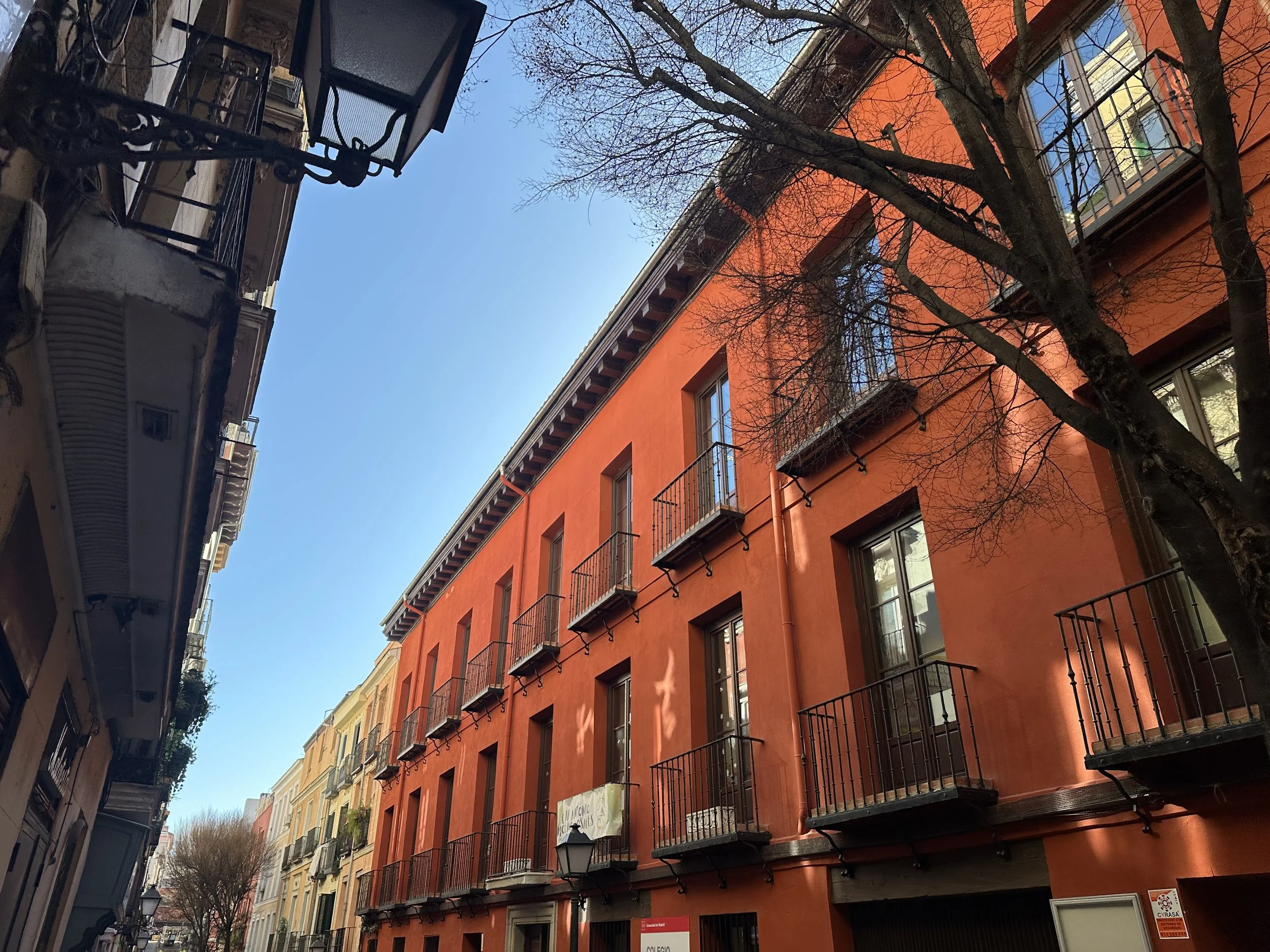
Architectural details and colour relationships observed during a visit to Madrid
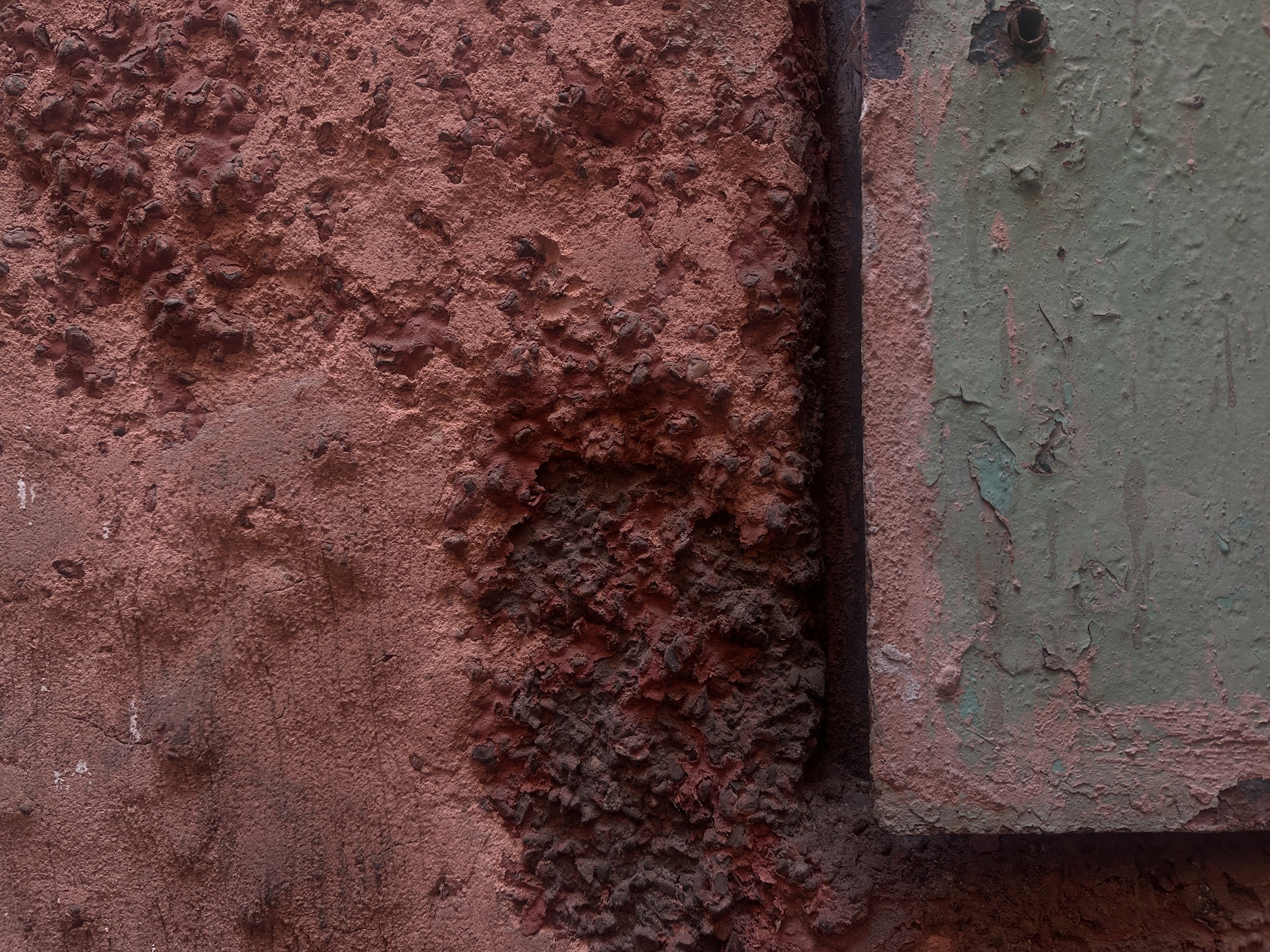
Weathered surfaces and layered textures photographed in Marrakesh
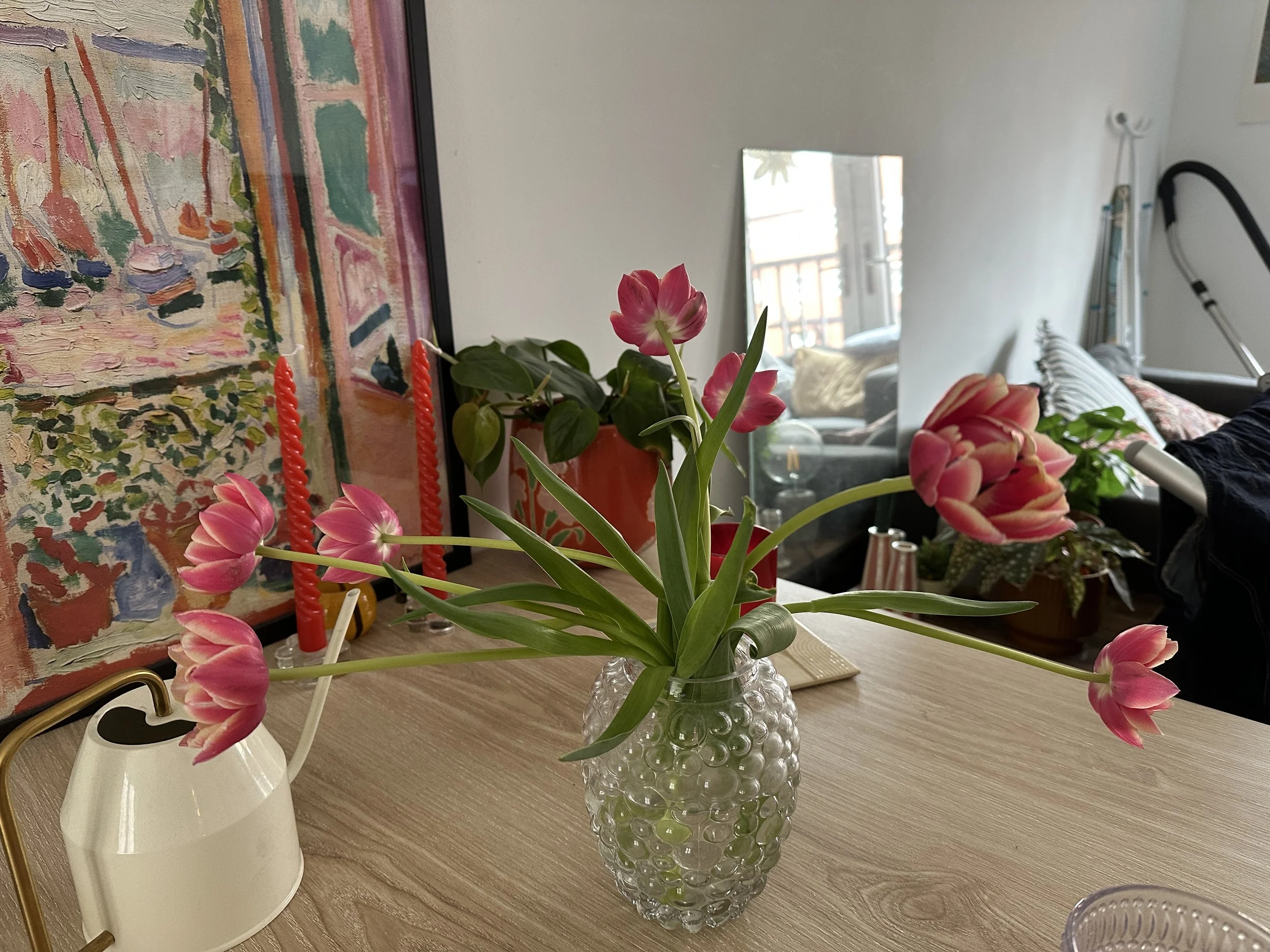
An everyday observation from Daisy's camera roll, reflecting her ongoing interest in colour, form, and visual moments
Sketchbooks and Visual Notes
While photographs often capture fleeting moments of inspiration, sketchbooks provide a different space for ideas to develop. Within their pages, observations are recorded, colour combinations are explored, and visual fragments are collected over time. They offer a place where thoughts can remain open, allowing ideas to evolve gradually rather than rushing towards a finished outcome.
For Daisy Fulton, sketchbooks function as an ongoing archive of looking and thinking. Alongside quick sketches, written notes, and collected references, they reveal a practice rooted in observation and curiosity. These pages are not simply preparatory studies for future paintings; they document a continuous process of gathering, reflecting, and responding to the world around her.
Looking through these sketchbooks offers a deeper insight into the early stages of Fulton's creative process. They reveal how small observations, colour relationships, and everyday experiences are preserved and revisited, eventually finding their way into the studio and, in time, onto the canvas.
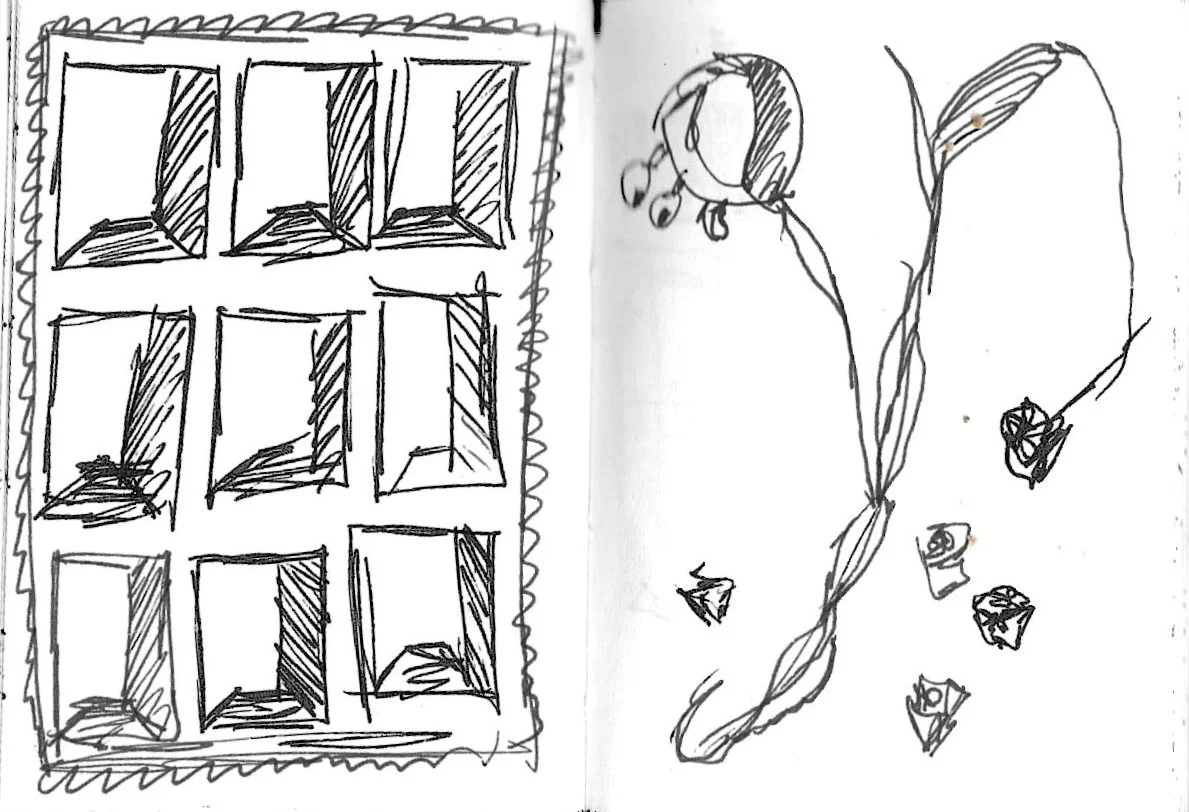
Pages from Daisy Fulton's sketchbooks, where observations, colour studies, and visual ideas are collected over time.
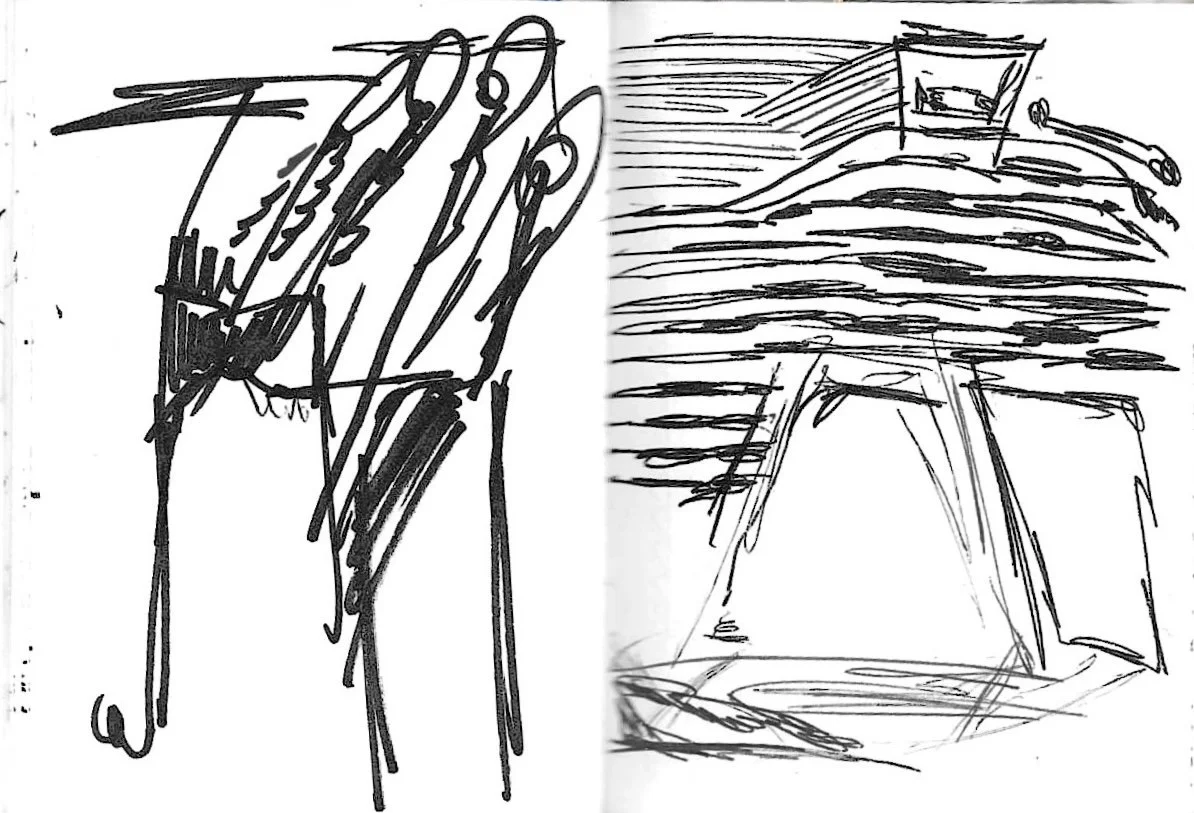
Sketchbooks serve as an ongoing archive of thoughts, references, and experiments
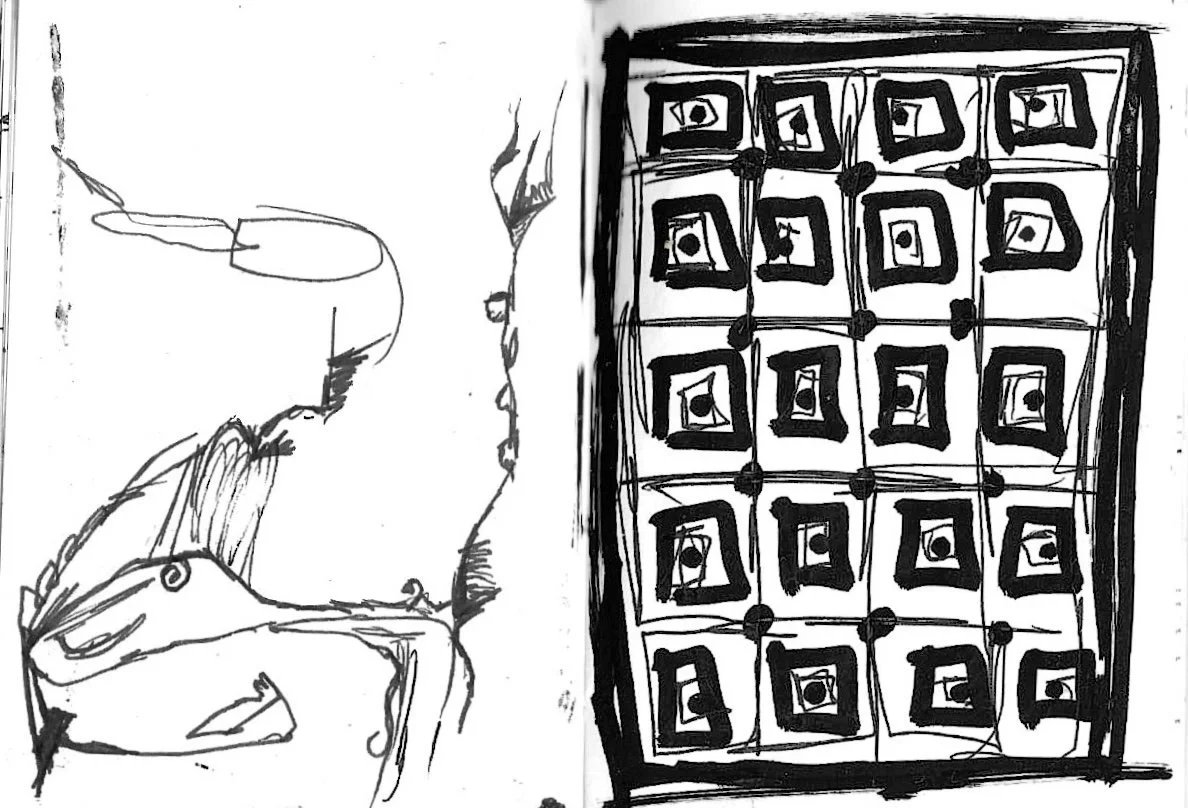
Notes, sketches, and fragments that contribute to the development of new paintings
These sketchbook pages offer a different view of Daisy's practice. Unlike the paintings, where colour often takes centre stage, the drawings rely on little more than a few quick lines. Windows, flowers, furniture, and everyday objects appear repeatedly, stripped back to their most essential forms.
There is a sense of immediacy to these sketches. Some feel like visual notes made in passing, while others seem to explore how a shape might occupy a page. Rather than focusing on detail, Daisy appears more interested in rhythm, balance, and the relationship between forms. Looking through them feels less like reading a plan for future paintings and more like stepping into an ongoing conversation between observation and intuition.
Together, these pages reveal how ideas begin to take shape long before they reach the canvas. They remind us that painting often starts with something simple: a line, a shape, or a fleeting moment that feels worth holding onto.
From Sketchbook to Canvas
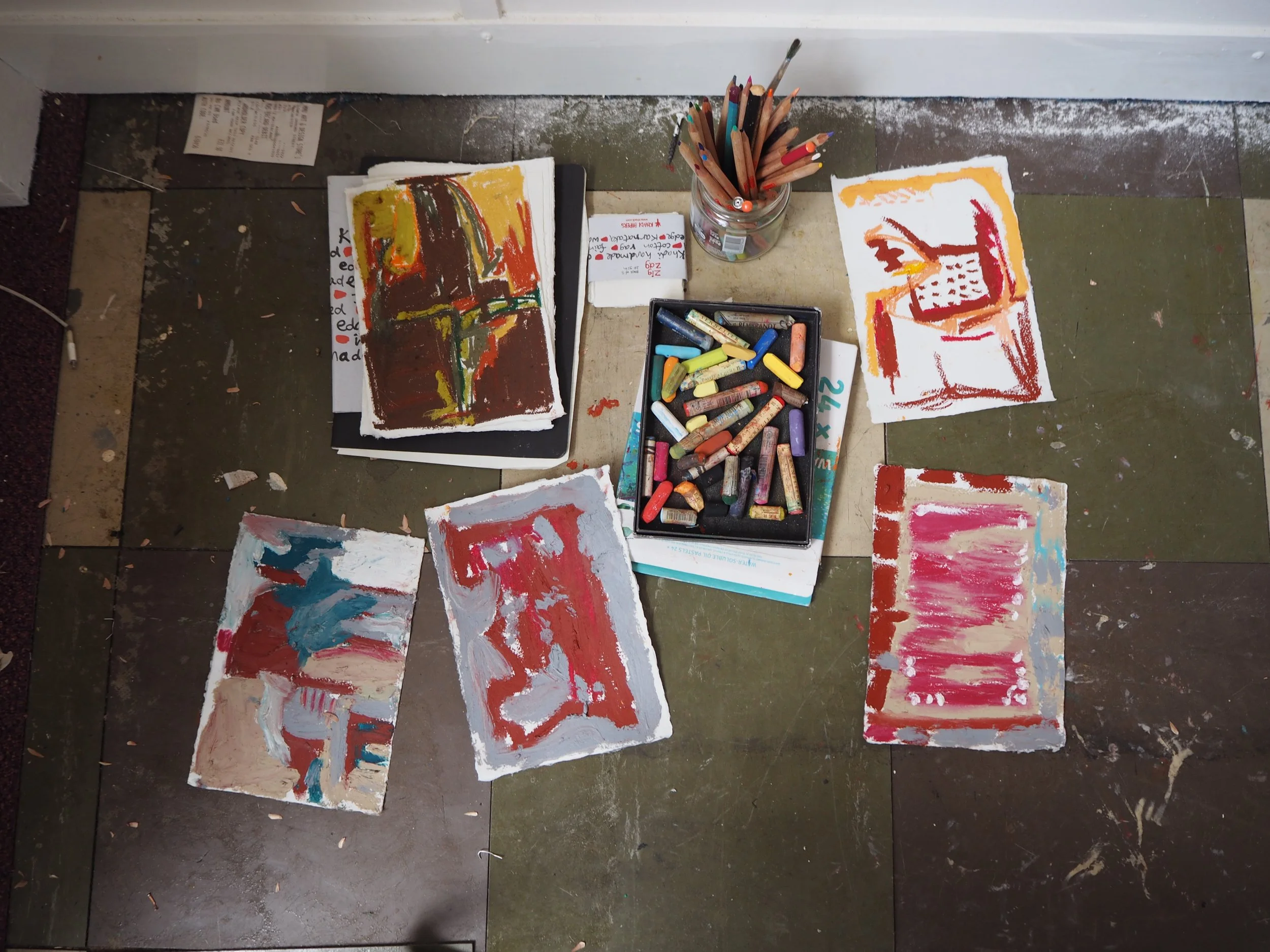
Works in progress, where compositions continue to evolve through colour, gesture, and revision
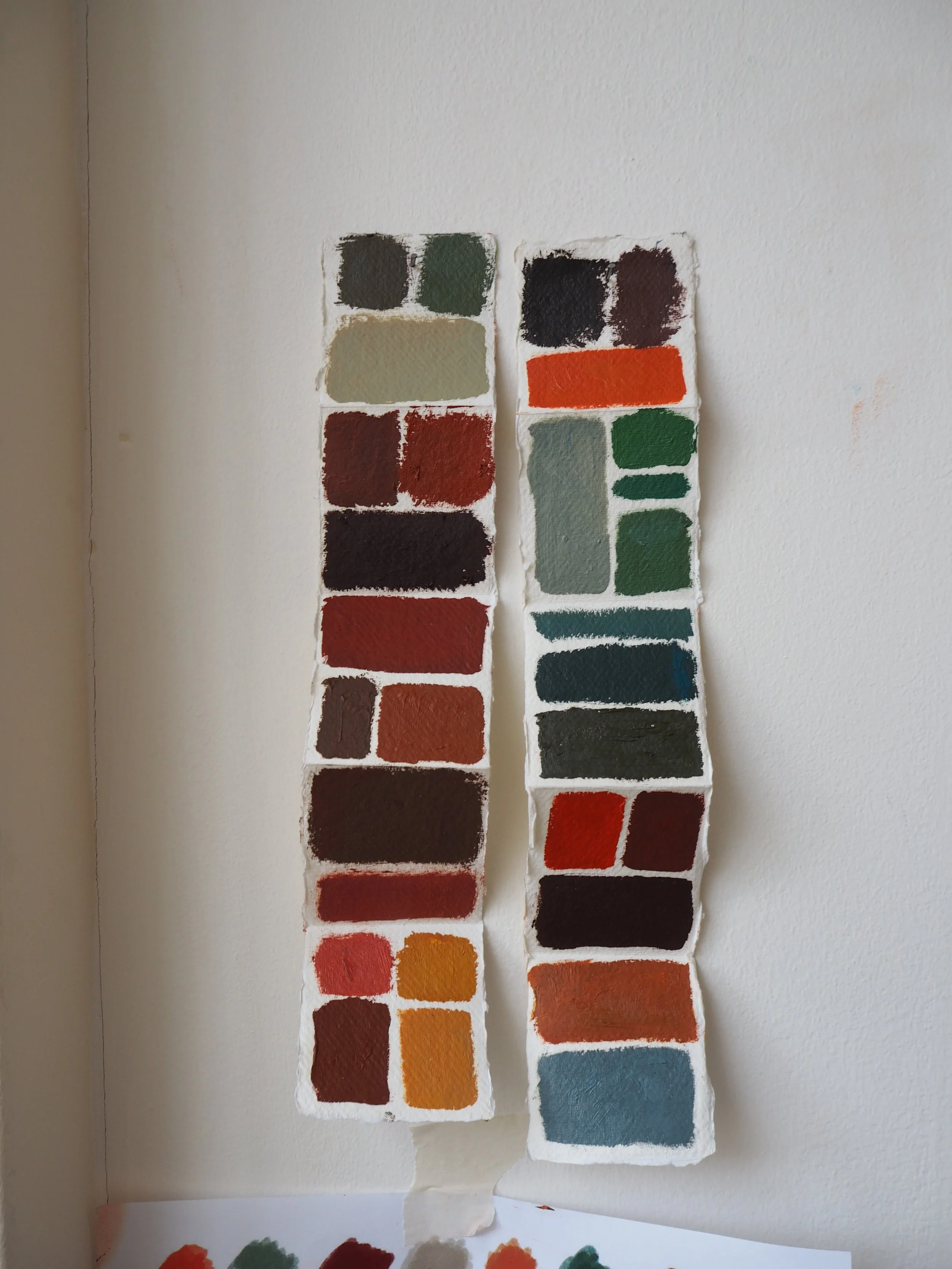
A collection of colour swatches used to explore palette, balance, and atmosphere within the studio
While sketchbooks provide a space for ideas to emerge, the studio is where those ideas begin to take on a different form. Moving from page to canvas is not a straightforward process. Rather than translating sketches directly into paintings, Daisy allows images to evolve through making, responding to colour, scale, and composition as the work develops.
Looking around the studio, paintings can be seen at various stages of completion. Some appear close to resolution, while others remain open and uncertain. This willingness to leave space for change reflects an important aspect of Fulton's practice. Paintings are not fixed from the outset but gradually discover their own direction through the act of painting itself.
In this way, the studio becomes a place of continual negotiation, where observation, memory, and intuition meet. What begins as a sketch, a photograph, or a passing thought is transformed through process into something entirely new.
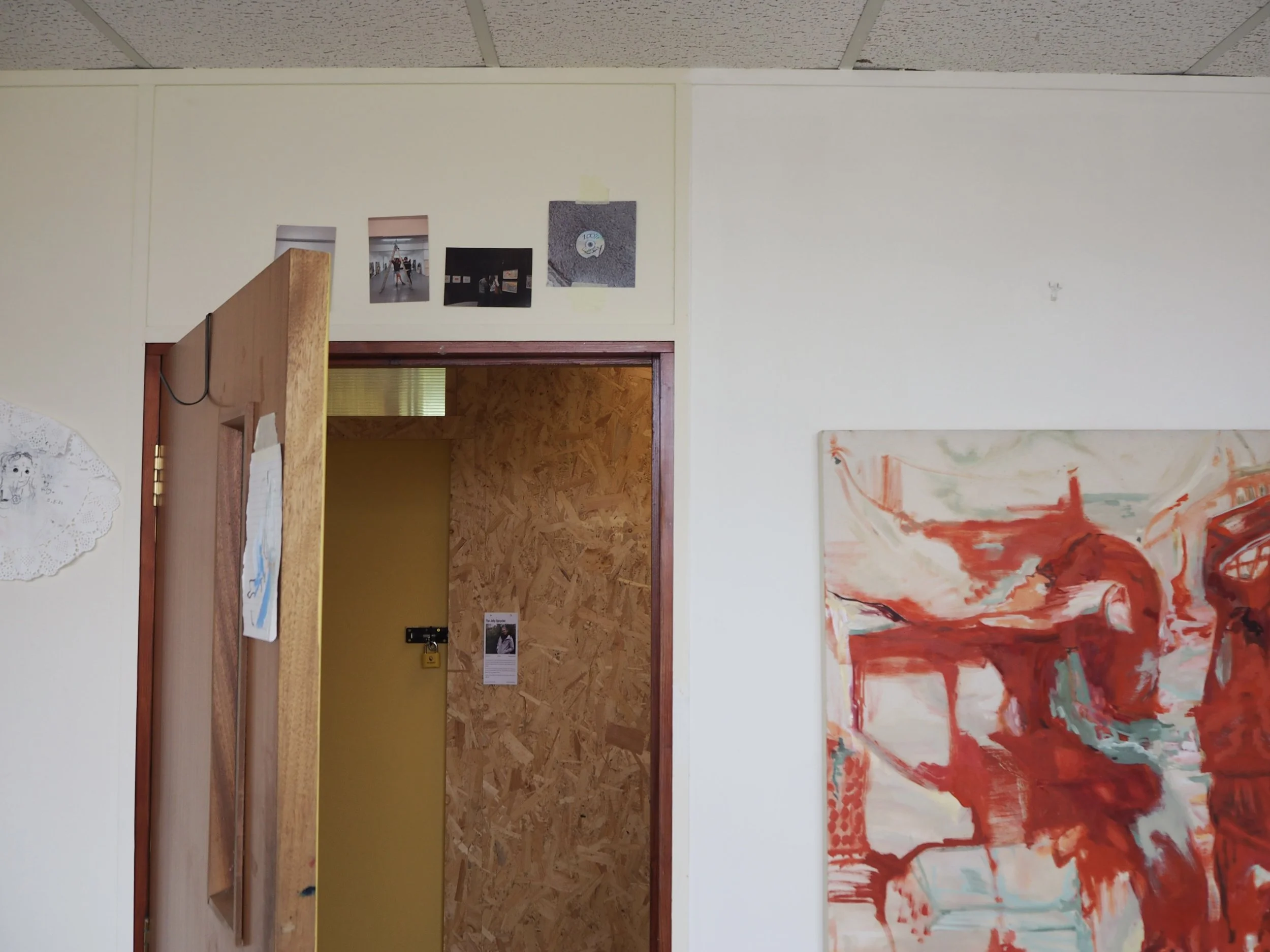
When in use, the studio becomes a space of constant movement, experimentation, and making
Paintings in Progress
Scattered throughout the studio are paintings at different stages of completion. Some remain open and unresolved, while others have already begun to settle into their final form. Together they reveal a process that is constantly shifting between intuition and reflection.
Rather than following a fixed plan, Fulton allows each painting to develop gradually through repeated adjustments, additions, and removals. Colours are layered, forms emerge and disappear, and compositions evolve over time. What remains visible is not only the finished image, but also the history of decisions that led to it.
Seen together, these works offer a glimpse into a practice that embraces uncertainty. The studio becomes a place where paintings are allowed to grow slowly, finding their direction through making rather than prediction.
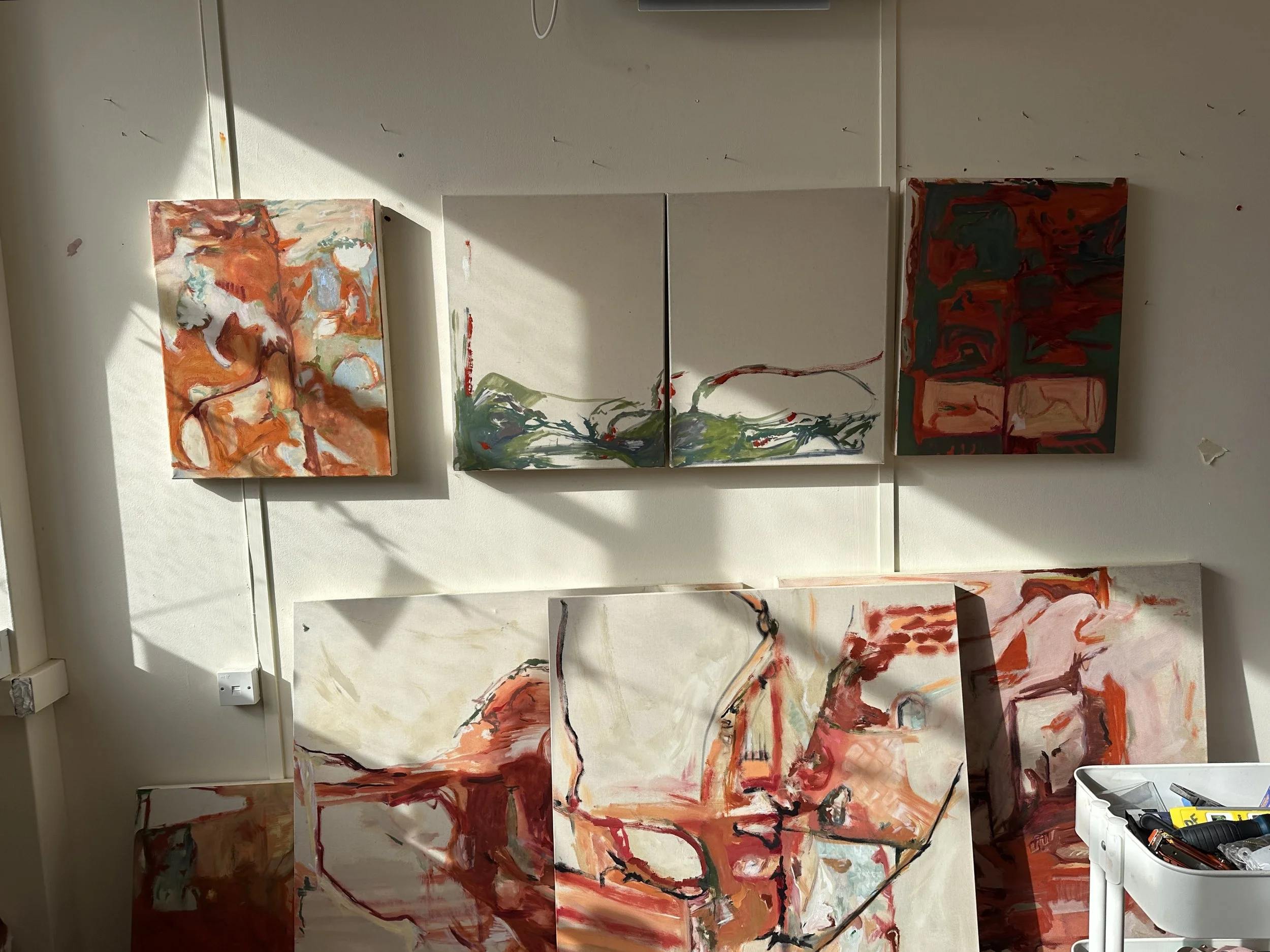
Paintings resting between moments of making, each carrying traces of ongoing experimentation and change
Looking at the works in progress throughout Daisy Fulton's studio, I found myself reflecting on what it means to be a painter today. In a world where images are constantly produced, shared, and consumed at an ever increasing speed, painting offers a very different relationship with time.
This feeling became particularly apparent when looking at the photographs Daisy shared of her studio at PINK. As the afternoon light moves through the space, falling across canvases, colour studies, and unfinished works, there is a sense that time slows down. The studio feels removed from the pace of everyday life, becoming a place where ideas are allowed to develop gradually and where uncertainty remains an essential part of the creative process.
Unlike digital images that can be created and forgotten within moments, paintings demand patience. Layers are built over time, compositions are reconsidered, and decisions are continually revisited. The unfinished works scattered throughout the studio are not simply steps towards completion, but traces of an ongoing dialogue between observation, memory, material, and time.
Perhaps this is one of the reasons painting continues to resonate in the twenty first century. In a culture shaped by immediacy and constant distraction, the studio offers a rare space for sustained attention. Through these works in progress, we are reminded that painting is not only about arriving at an image, but about allowing ideas the time and space to unfold.
What can a studio tell us about an artist?
Through the photographs Daisy Fulton shared with us, we are offered more than a glimpse into a studio. We are invited into a way of working, looking, and thinking. From travel photographs and everyday observations to sketchbooks, colour studies, and unfinished canvases, each element reveals a different stage in the journey of a painting.
What emerges is not a fixed method, but an ongoing process shaped by curiosity, attention, and openness. Ideas move between places, images, and materials before gradually finding their way onto the canvas. In this sense, the studio becomes more than a workspace. It is a place where experiences are gathered, tested, remembered, and transformed.
The photographs also offer a glimpse into the wider environment in which Fulton works. Based at PINK in Stockport, she is part of a vibrant and growing artistic community within Greater Manchester. The region has long been shaped by creativity, independent artist-led spaces, and cultural exchange, providing opportunities for artists to develop their practice while remaining connected to a wider network of makers, organisations, and audiences.
For artists like Daisy Fulton, Manchester offers more than a place to work. It is a city rich with creative energy, conversations, and possibilities. Alongside the quiet rhythm of the studio, this wider cultural landscape continues to support experimentation, growth, and artistic development.
Looking through these images, we are reminded that paintings rarely begin with a single moment of inspiration. More often, they grow from a collection of observations, encounters, and quiet decisions accumulated over time. It is within these spaces between looking, thinking, and making that Daisy Fulton's paintings begin.
We would like to thank Daisy Fulton for generously sharing photographs from her studio, sketchbooks, working process, travels, and sources of inspiration for this feature.
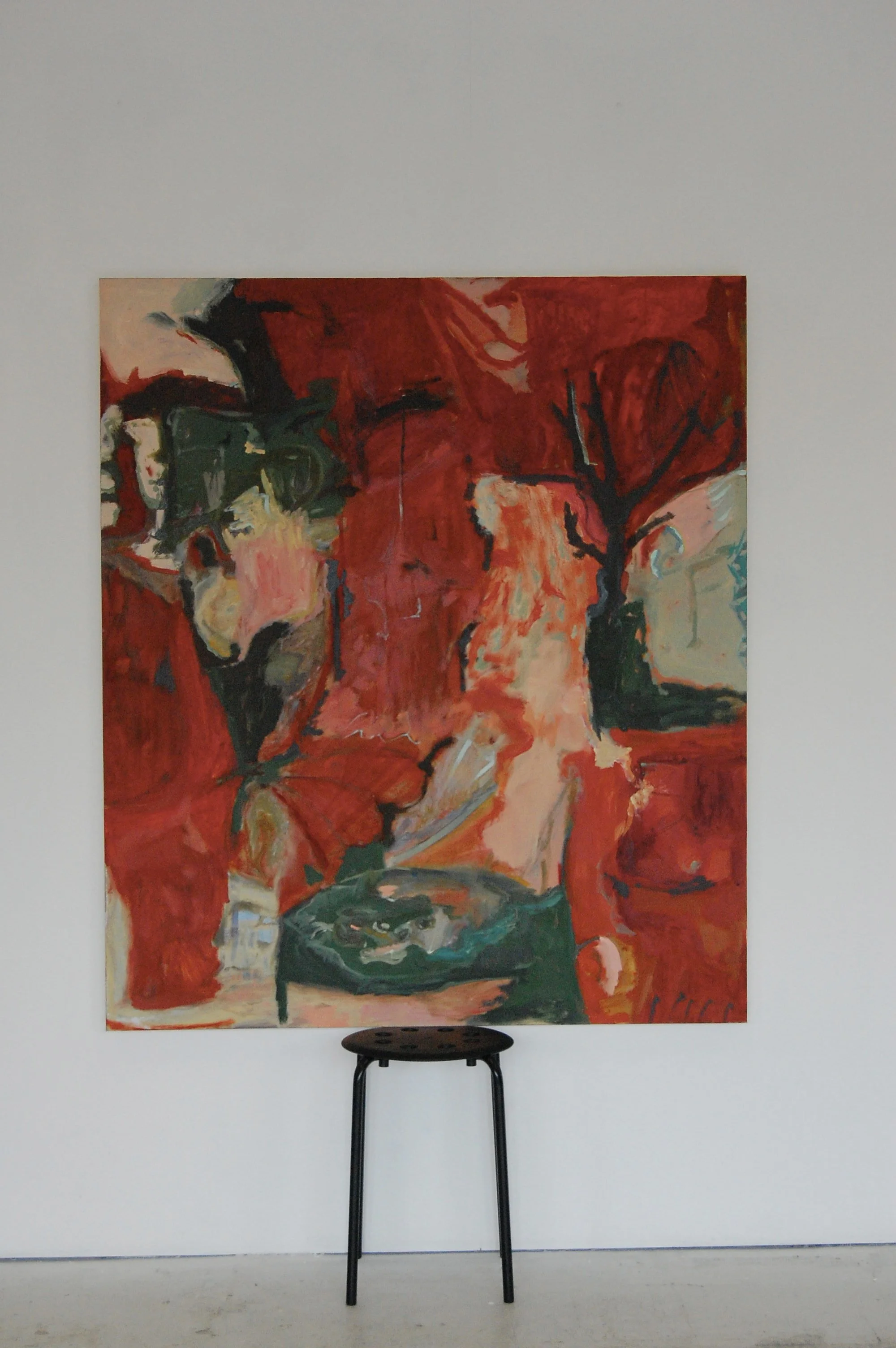
An evolving composition in the studio, revealing the physical process behind Fulton's paintings
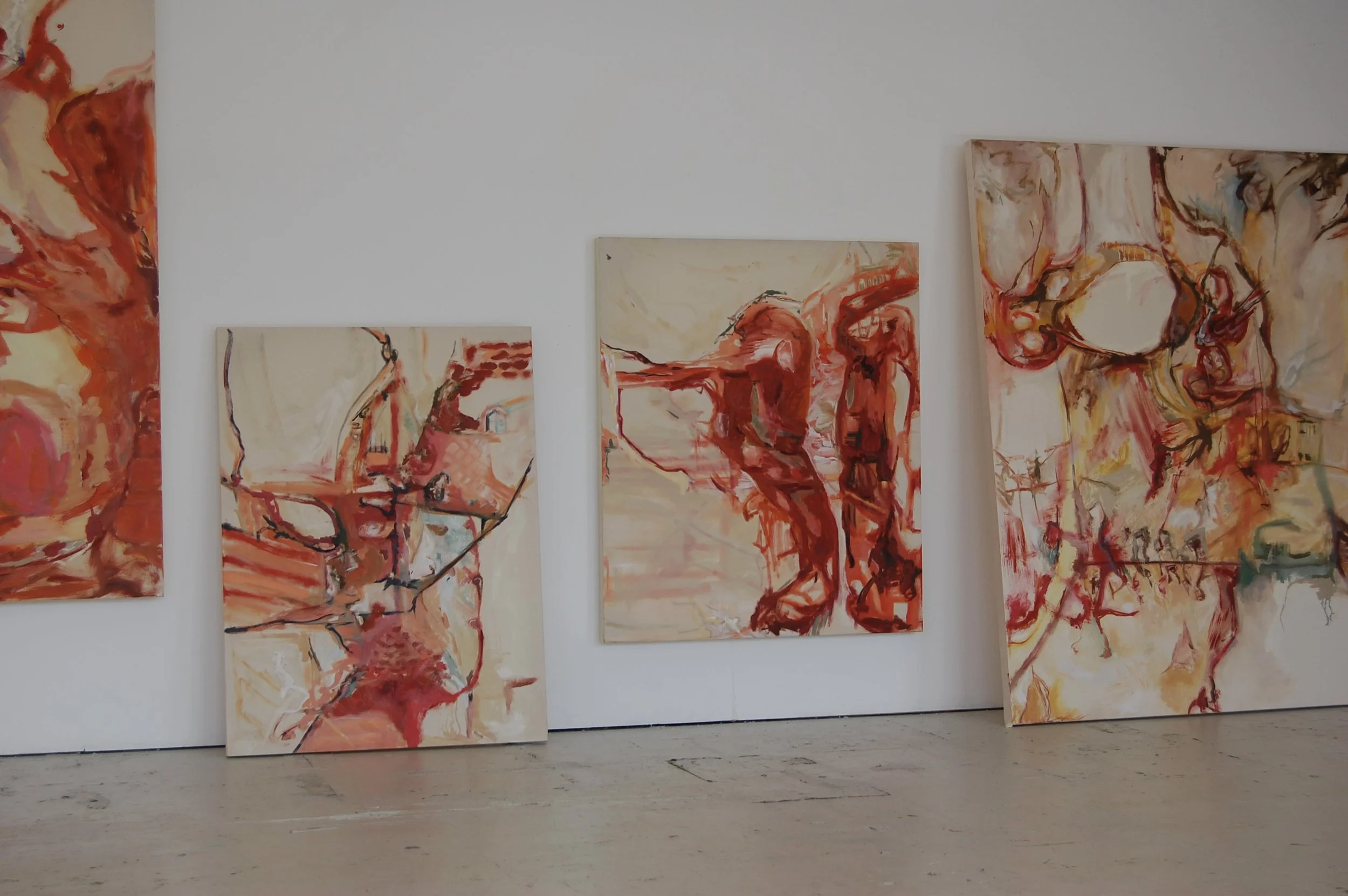
Paintings at different stages of completion, gathered together as part of an ongoing conversation between image, colour, and memory
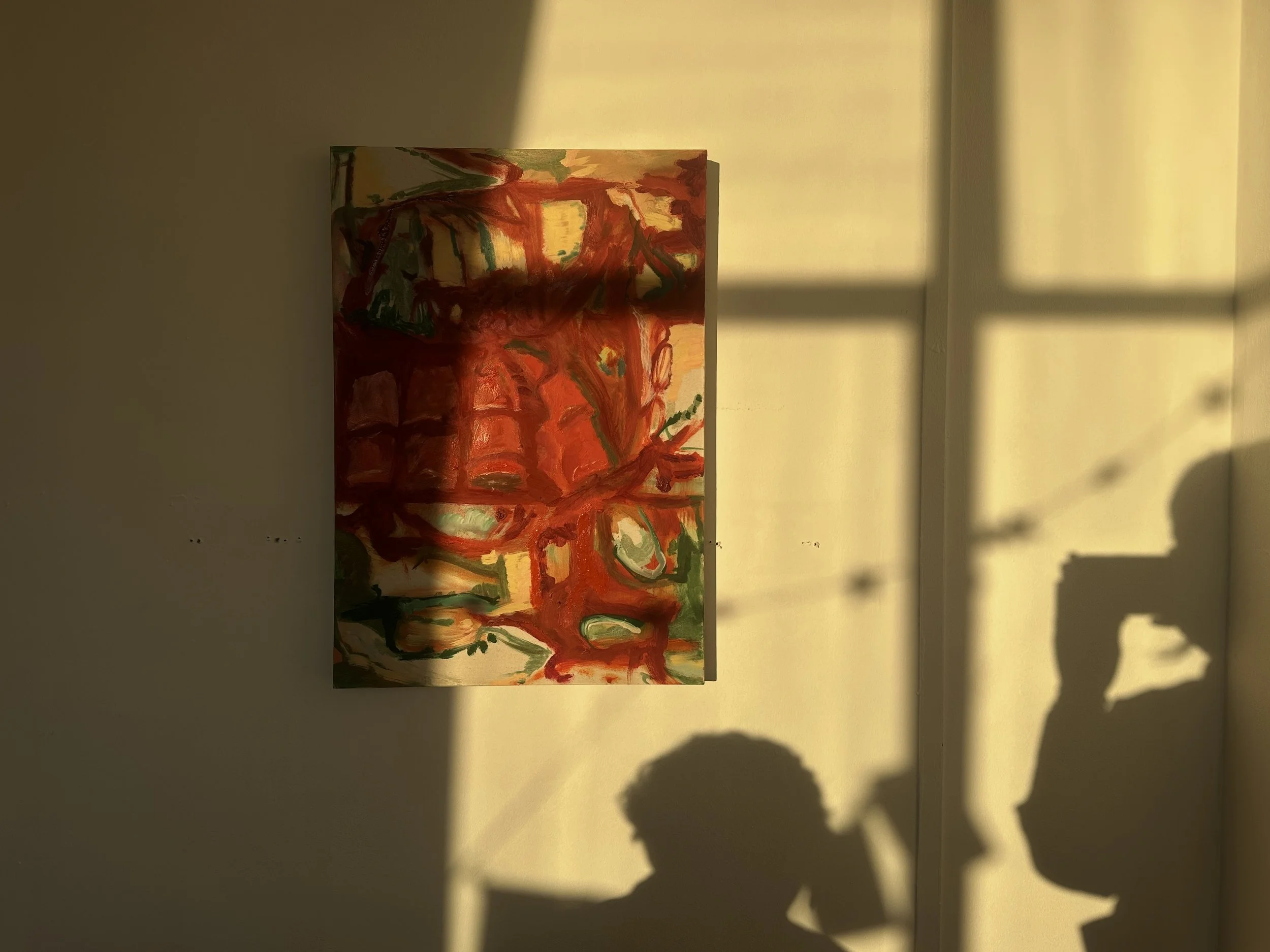
As daylight shifts through the studio, the paintings enter into a quiet dialogue with the space around them
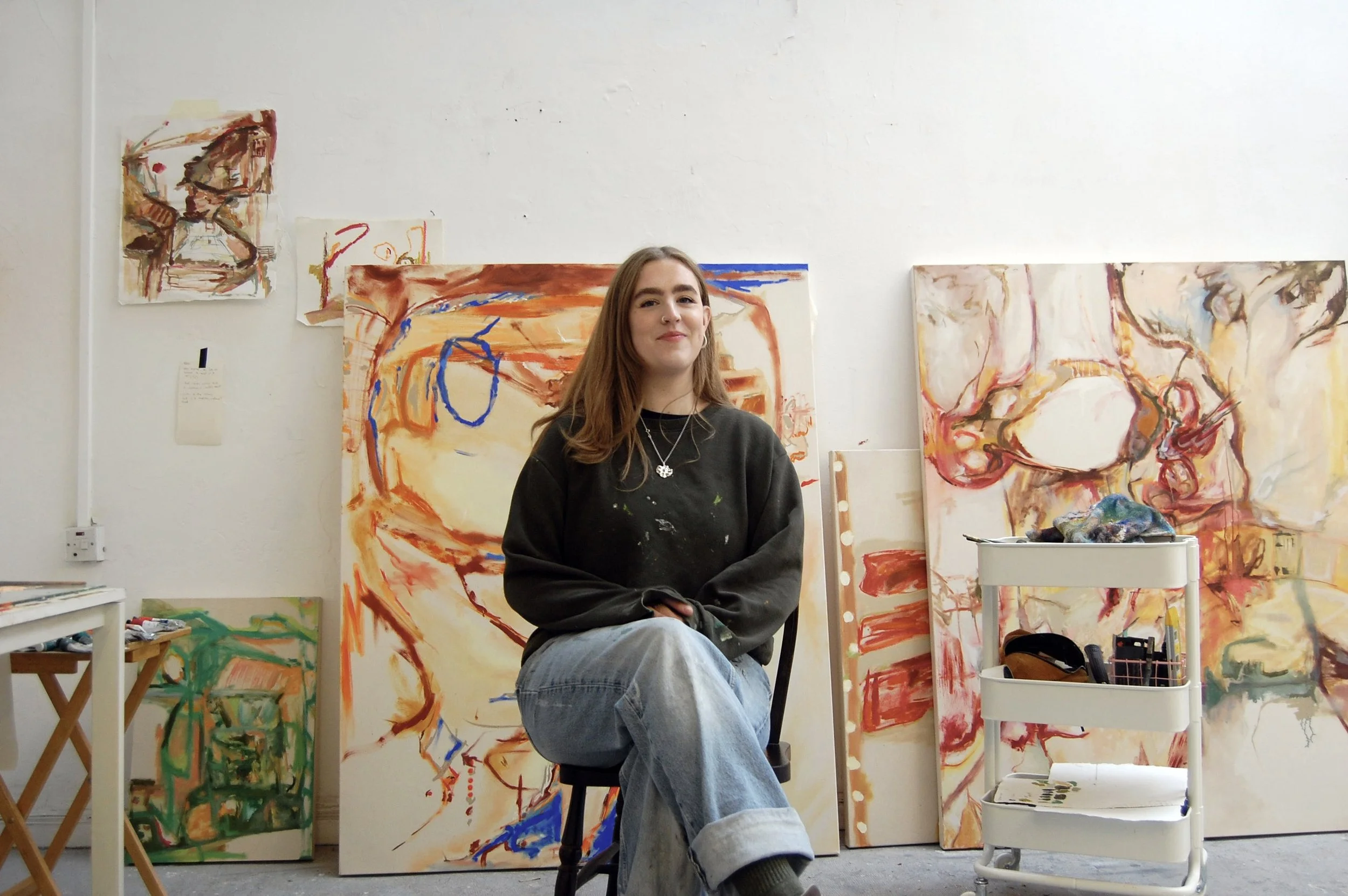
Daisy Fulton photographed in her studio at PINK, where observation, experimentation, and painting continue to unfold
Image Credits
All images featured in this article are courtesy of Daisy Fulton and are reproduced with the artist's permission. Copyright remains with the artist.