Women(Oracle bone script*)
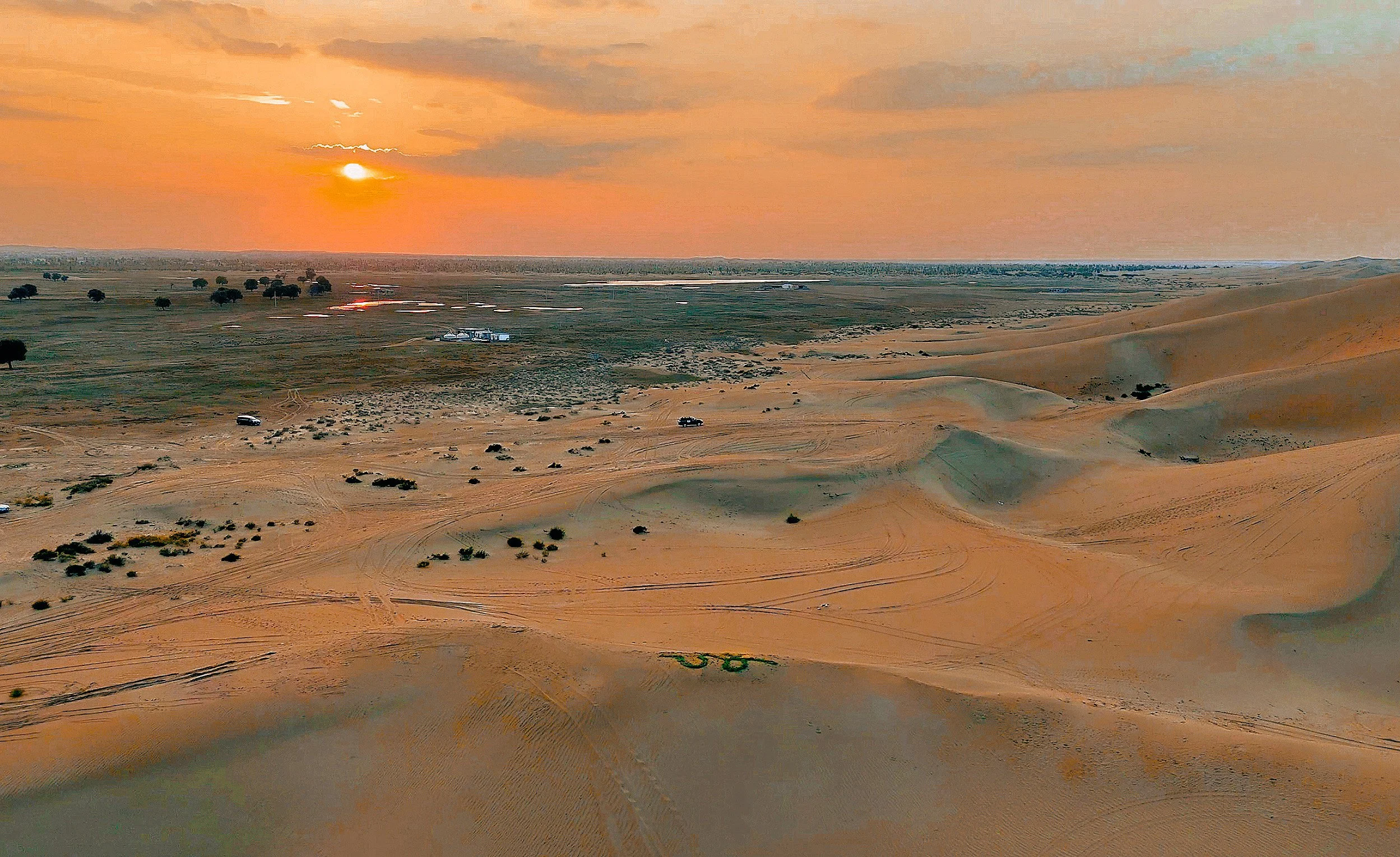
The second co-creation project in the Kubuqi Desert was "Women". The herders led me to Qixing Lake, which is further into the desert following "Ice Wall". The region has lost its ecological identity due to grazing limitations, ecological displacement, and land reconstruction. Previously, it was a water source for nomadic existence.
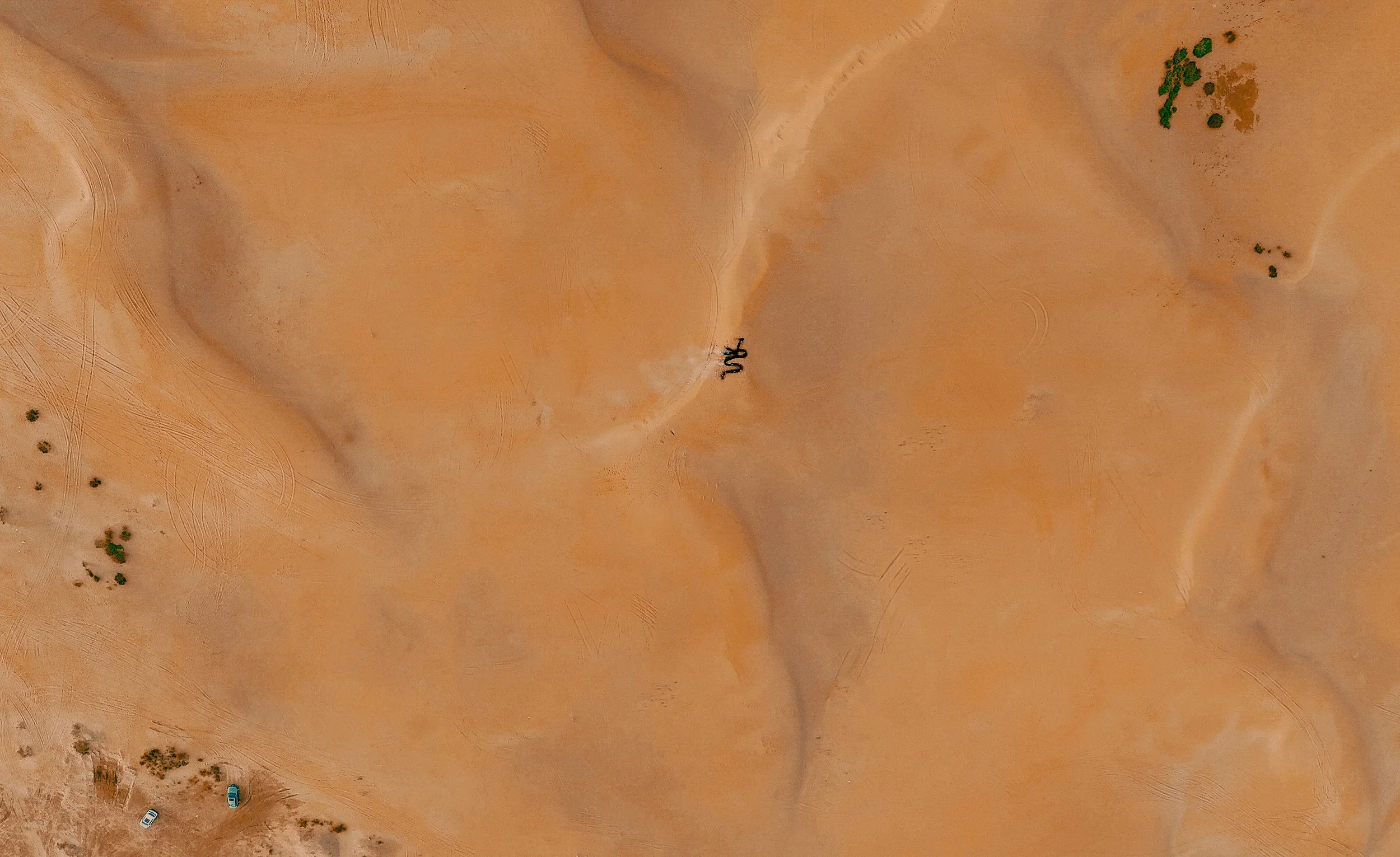
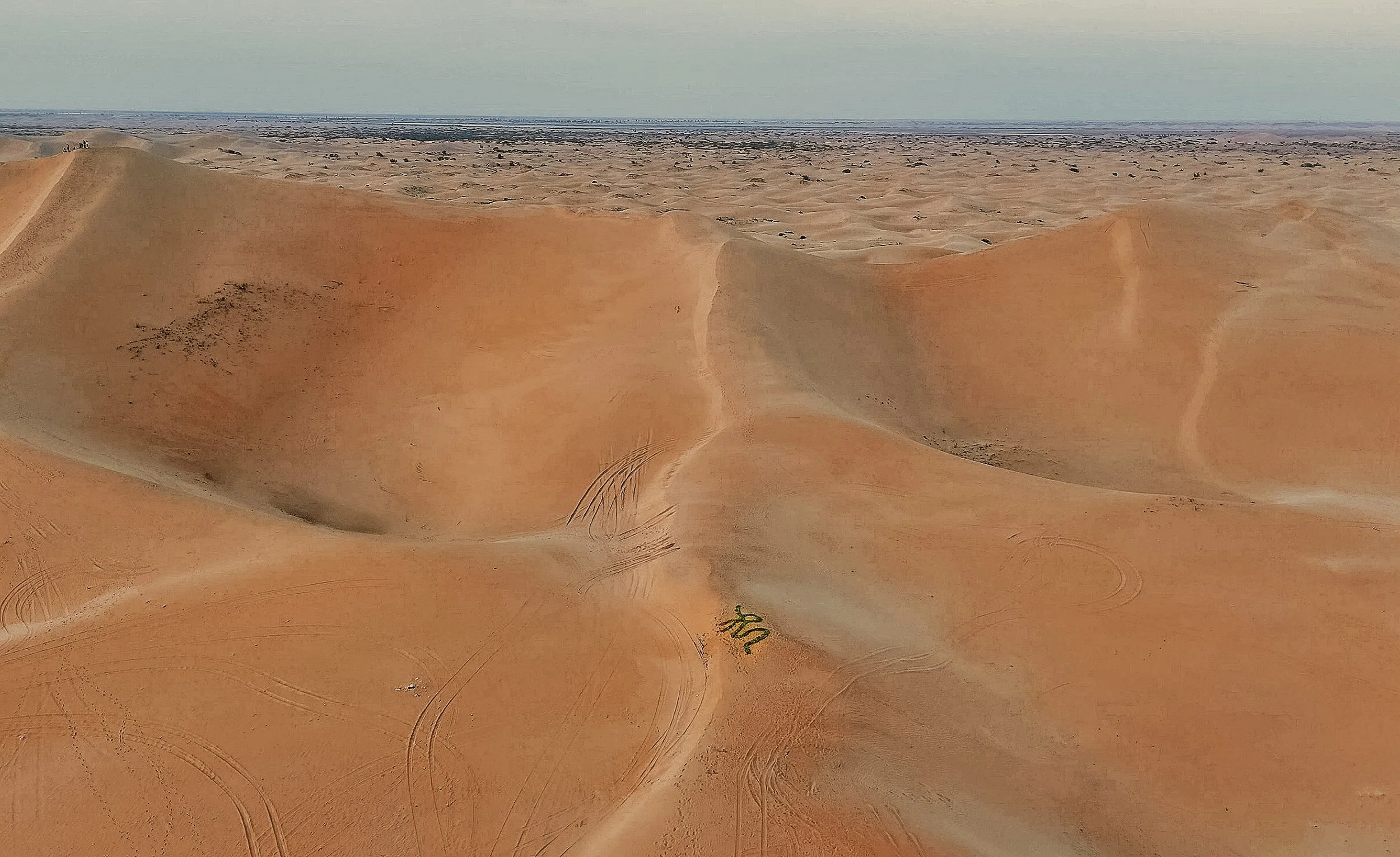
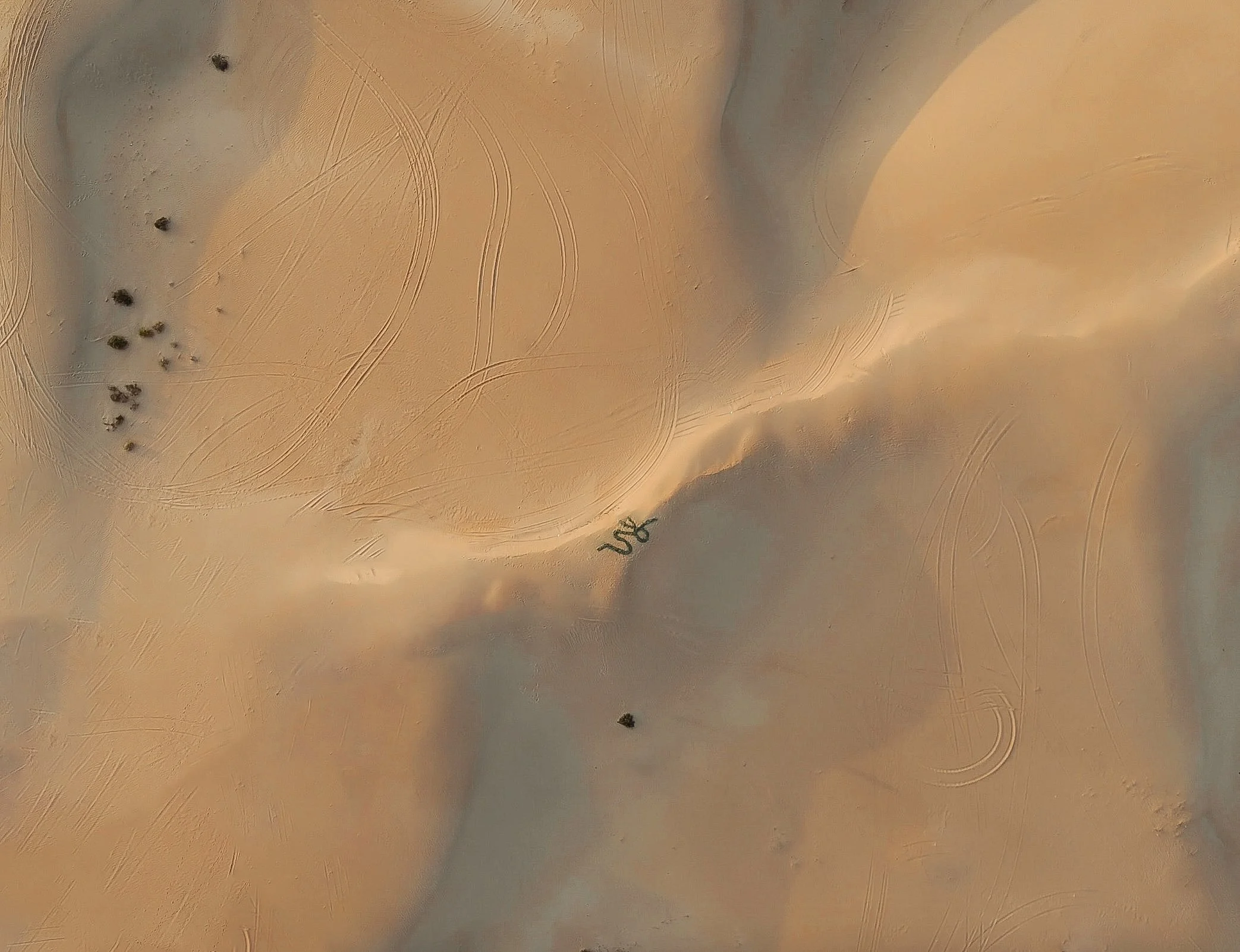
The work's form is inspired by one of China's earliest pictographic signs: the oracle-bone character for "woman," a stylized kneeling figure linked with submission and gendered constraint. It is one of the oldest visual symbols in East Asia to imprint gender, posture, and cultural norms on the human body. Along the desert ridge, we sketched the character's shape using winter grass kept by local herders and ignited it before dark.
Fire symbolizes life, home, and protection in Mongolian culture. The desert's surface resembles human skin, and the short-lived scars produced by fires allow body, gender, and location-based memories to form between ash and light. The dry grass, which herders and their animals rely on as a crucial resource, burns and returns to the soil, symbolizing resource depletion and the start of a new cycle. We erected firebreaks and extinguishers to ensure safety, and after the work was completed, we thoroughly cleaned up.
"Women" address embodied practice, co-creation, and the transience of materials. The work considers how gendered bodies, cultural memory, and ecological knowledge survive, shift, or perish under the pressures of modernity. It encourages both local and faraway tourists to notice the brief reappearance of an antique sign in the desert.
* Oracle bone script, which dates to the late second millennium BC, is the earliest known form of written Chinese and offers information on ancient Chinese culture, history, and customs. Oracle bones, typically the shoulder bones of oxen or the plastrons of turtles, were carved with characters to create inscriptions. Scapulimancy was the method used for these divinations, in which the oracle bones were exposed to flames to produce patterns of cracks that were subsequently interpreted.